First parts with ballscrews/rails

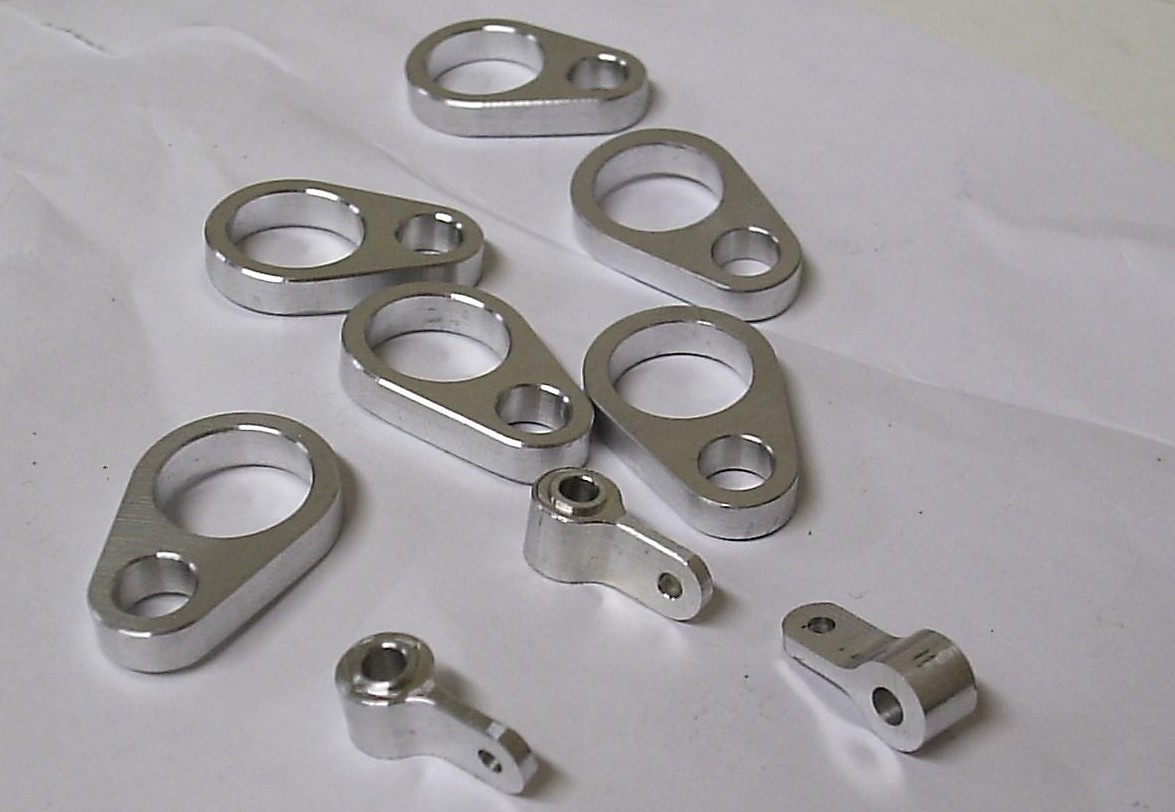
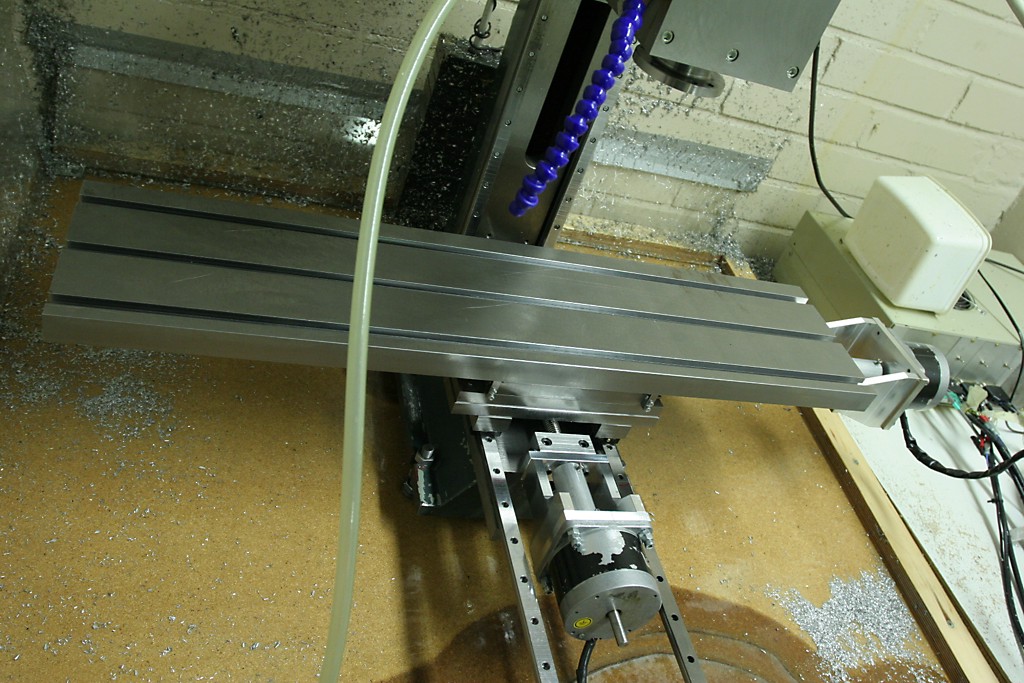
Here are some of the first parts made with our new upgraded mill which now runs with ballscrews and linear rails. Top speeds as well as accelerations are up on all axes, and there's very little risk of losing steps any more. Hope to have the servo electronics ready sometime in May...

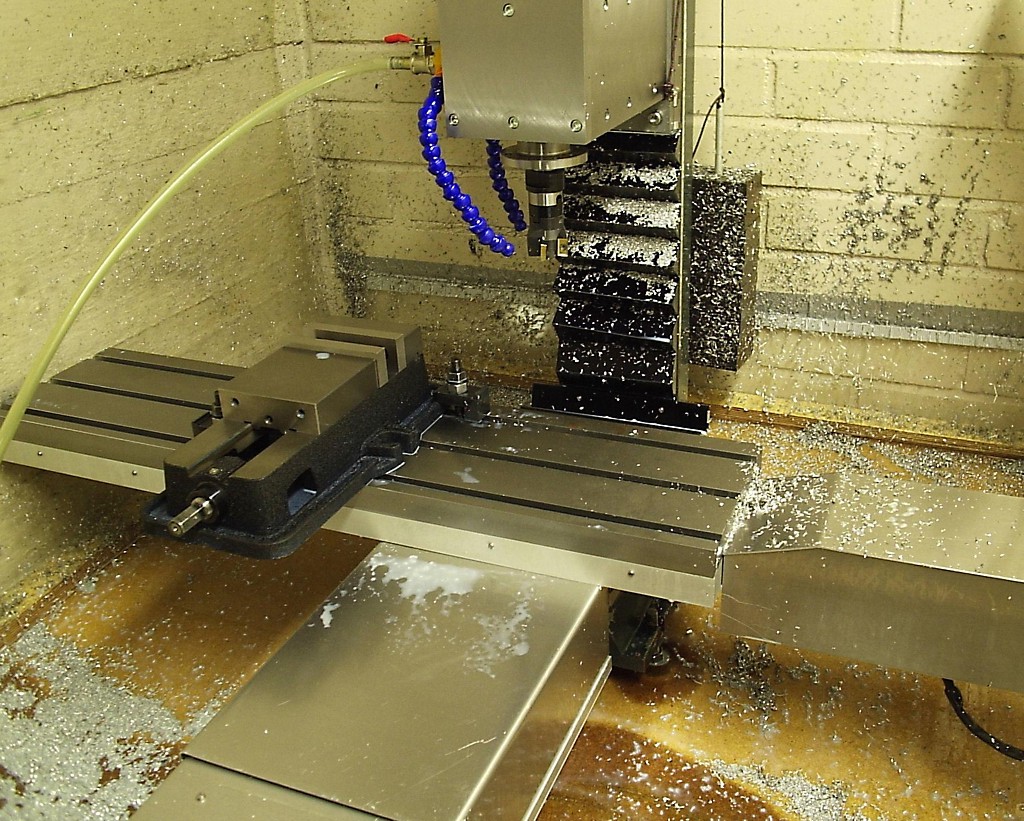
Jari also made some useful chip/coolant guards for both the motors and the ballscrews/rails. As you can see these are mandatory when 'making chips' with a 3000rpm spindle and lots of coolant!

The new table is so long it hits the wall - We need to move the machine to a new stand and redo the enclosure.

Servo electronics progress

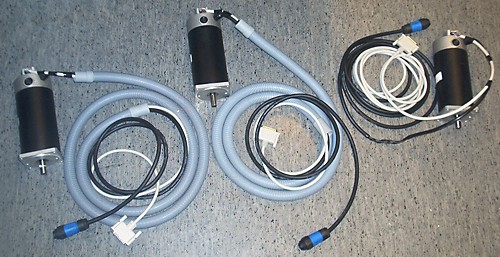
Now that the mechanical side of our Opti-BF20 upgrade is almost complete I'm trying to get all the bits and pieces together for the electronics upgrade too. Here I've made cables for the servos. Three 1.5mm^2 conductors (+, -, and protective earth) in the black wire carry power to the motor, and I use a 25-pin (10 of which are used) parallel printer-port cable (white) for the differential encoder. Since we're going to be using flood coolant I've used plastic tubes (grey) around the X and Y motor cables to keep them dry.

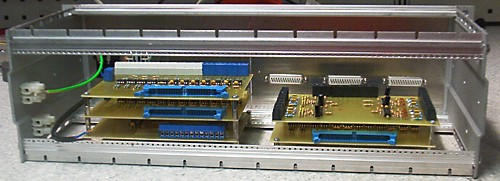
This is the 'breakout-box' for the m5i20. On the left the jogwheel card is on the bottom with two general purpose IO optoisolator cards on top. To the right the motion-control optoisolator on the botton and the differential encoder interface on top. The next job is to wire everything inside the box and start testing how all signals come through to HAL. I'll put together a pyVCP panel for testing everything.

Opti-BF20 on rails

Jari has almost completed the mechanical part of our cnc-mill upgrade: fitting a new 500 mm X-travel table on linear rails and installing ballscrews.

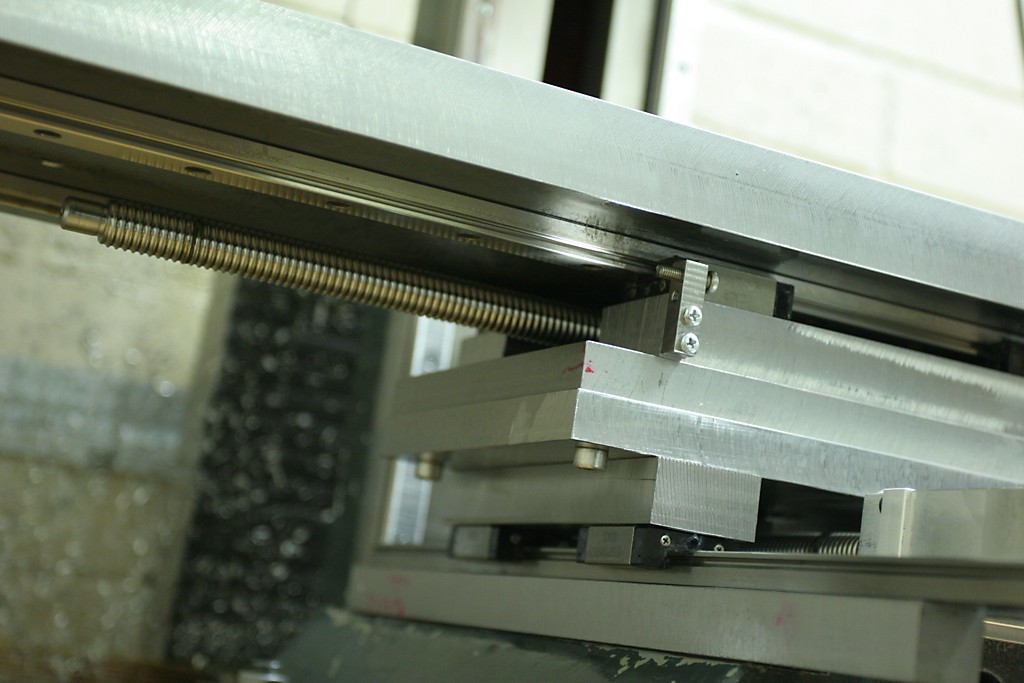
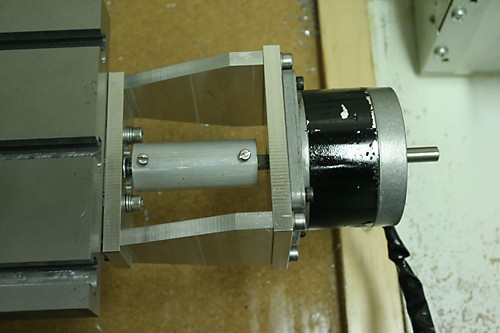
The bearing holders for the free end of the ballscrews are not done yet, so in the pictures the free ends are ...free. Here you also see how everything is assembled: the Y-axis ballscrew and rails sit on the base of the machine, there's a two-part saddle plate on the Y-bearing blocks, and the X-rails/ballscrew attach to the underside of the table.

The new table assembly is a bit higher than the old table which means that Z-travel is restricted. We also need to make a slot in the Y-axis saddle plate to allow for the axis coupler to slide under it. Now Y-travel is only about 150 mm, but it should go up to 200 with this mod.

Initial tests with the old stepper motors and temporary crude axis couplers are promising. We have elminated backlash, and friction is down a lot meaning higher velocities and accelerations are possible. Can't wait to see how this thing moves with the servos!

Differential Encoder Interface

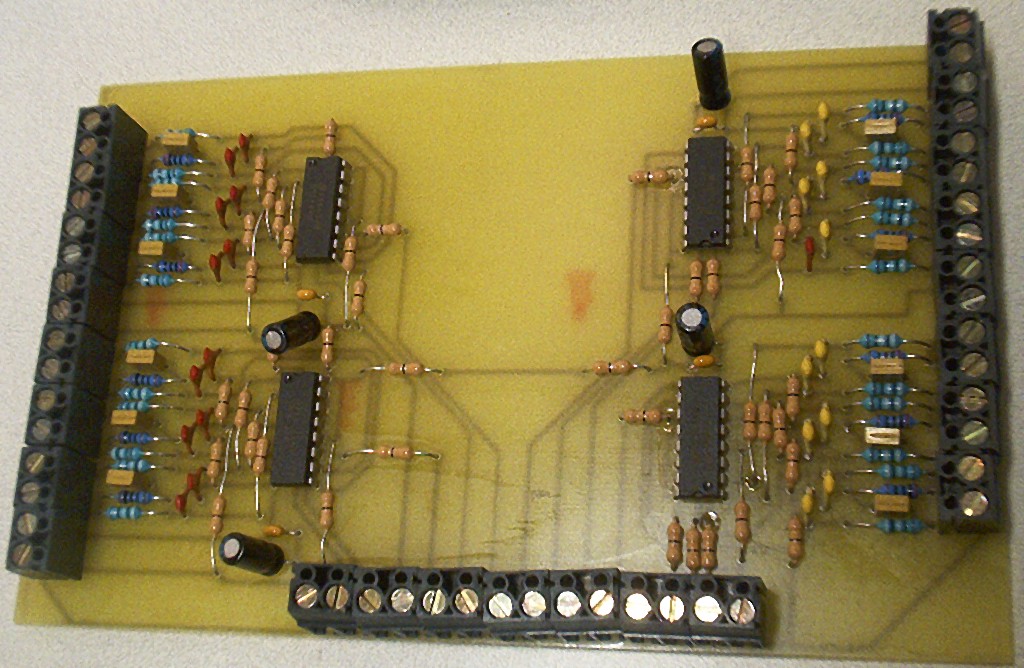
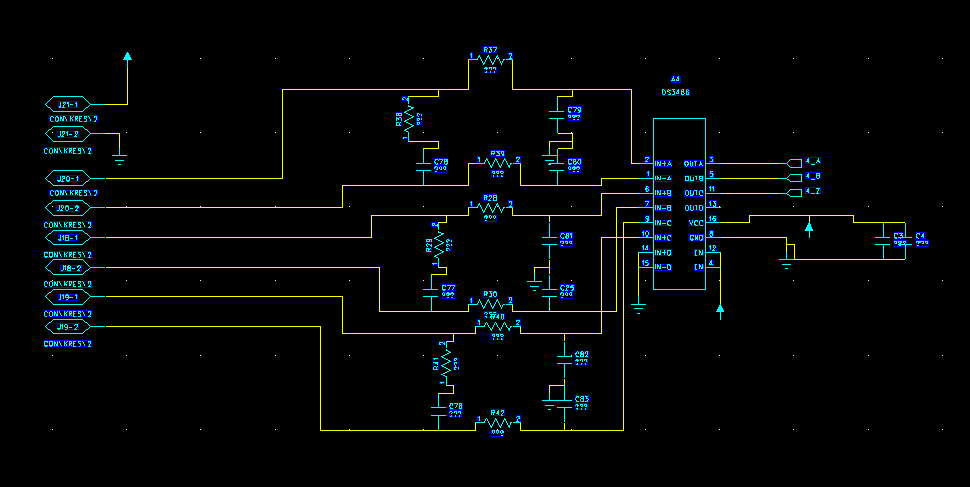
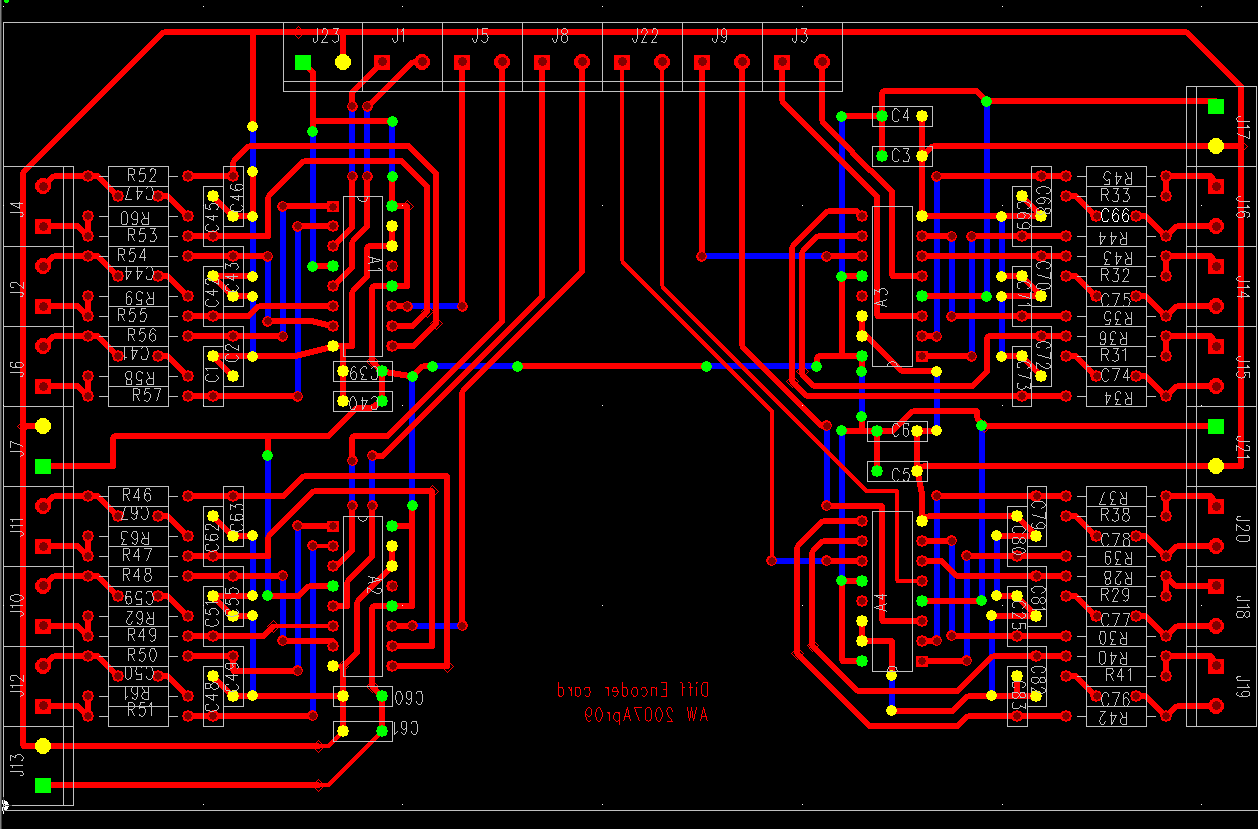
I threw together this board for decoding the differential encoder signals coming from the servos. I don't like etching two-sided PCBs, but I'm not sure I like this many zero-ohm jumpers either... It's basically four DS3486 ICs with input filters + a lot of connectors.

The circuit is borrowed from an IRF application note, second to last page of this document: http://www.irf.com/technical-info/refdesigns/dg-irmck201.pdf

Not very compact or cute, but hopefully functional...

Source: PADS PowerLogic schematic and PADS PowerPCB PCB-layout.

Helsinki Model Expo 2007 - Day 3

Last day at model-expo, my first try at using google video!

First the new Futaba 2.4GHz radios. There are two wheel-model radios already on the market, and I was told two stick-radios (a 3-channel and a 6-channel model) will be in stores very shortly. Priced close to the Spektrum offerings at around 200 eur. Then to the pool for some scale-models. A fast electric racing boat after that, followed by some aerobatics, and some car-racing at the end.


(the noise from the fans was not as bad as it sounds in this video...)Then MicroMagic sailing! We had a lot of fun and a fair bit of spectators for each of our sailing shows, about 15-20 minutes every hour. You can see that the two fans we brought with us don't cover all of the pool, and that the wind speed is quite fast near the fans and lighter downwind. More boats and more fans for next year!

When someone interested came to talk to us it was so easy just to point to the many MicroMagic vendors and say 'there, that's where you get it and it costs around 250eur with everything (boat, radio) included.' This relates to what I wrote earlier, I believe the success of the micromagic largely depends on it being cheap and easily available.

So, for the IOM class to experience continued growth I think it would be a great help if a competitive boat would be mass-produced (in ABS or similar). I know Graham B in the UK and John E in the USA have had some plans... but nothing seems to have materialized yet. Newcomers to our sport don't want to send 1000 or more euros overseas and then wait 3-6 months for a (hand made) boat, they want their new boat now, cheaply, and from the local hobby store.

Thanks to Jari for lending me his MiniDV camera.