A roadtrip closer to home, around the archipelago route(http://www.archipelagoroute.com) Pargas-Nagu-Korpo-Houtskär-Iniö-Gustavs by car/ferry.
Text/links/images to follow, for now pics from days 1-2 are on picasa:
http://picasaweb.google.com/anders.e.e.wallin/ArchipelagoRoute2010August#
Month: August 2010
Links - 2010 Aug 5
- Narrowband Ha Filter Comparison -
- Equatorial Mounts For Budget Astrophotography? -
- Toothpick orbital sculpures -
- Asics Gel-1150 Men’s Running Shoe Review -
- Novo Blog - check out Fred Schmidt's new radio yacht design blog: http://iomdesign.wordpress.com/
- Time-lapse video of an ant colony inside of a scanner -
The weave point-order problem
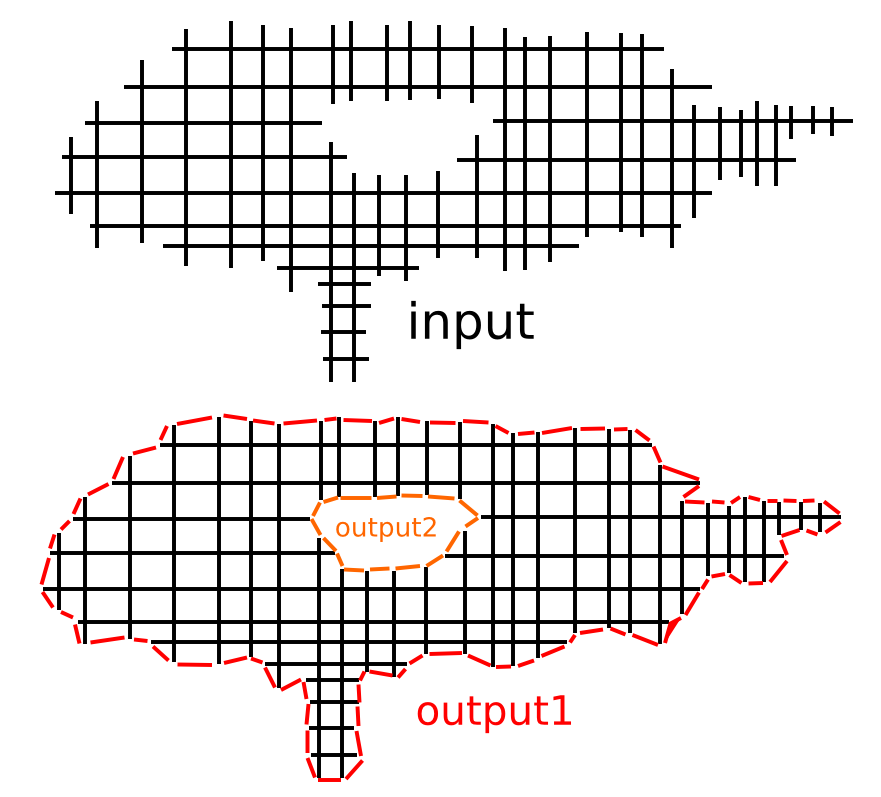
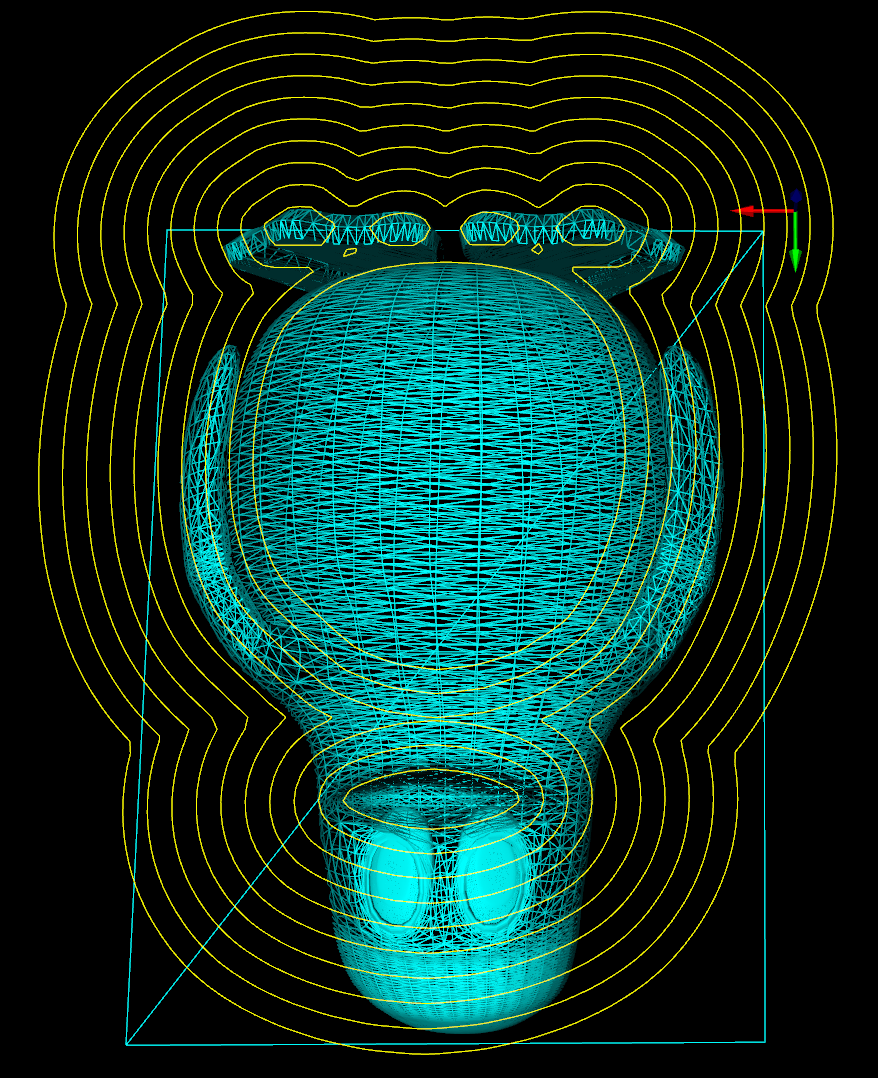
When creating waterlines or 2D offsets using a "sampling" or "CL-point based" approach the result is a grid or weave such as that shown in black above. The black lines can in principle be unevenly spaced, and don't necessarily have to be aligned with the X/Y-axis. The desired output of the operation is shown in red/orage, i.e. a loop around/inside this weave/grid, which connects all the "loose ends" of the graph.
My first approach was to start at any CL-vertex and do a breadth_first_search from there to find the closest neighboring vertices. If there are many candidates equally close you then need to decide where to jump forward, and do the next breadth_first_search. This is not very efficient, since breadth_first_search runs a lot of times (you could stop the search at a depth or 5-6 to make it faster).
The other idea I had was some kind of 'surface tension', or edge removal/relaxation where you would start at an arbitrary point deep inside the black portion of the graph and work your way to the outside as far as possible to find the output. I haven't implemented this so I'm not sure if it will work.
What's the best/fastest way of finding the output? Comments ?!
Update: I am now solving this by first creating a planar embedding of the graph and then running planar_face_traversal with a visitor that records in which order the CL-points were visited. The initial results look good:
Faster waterlines with OpenMP
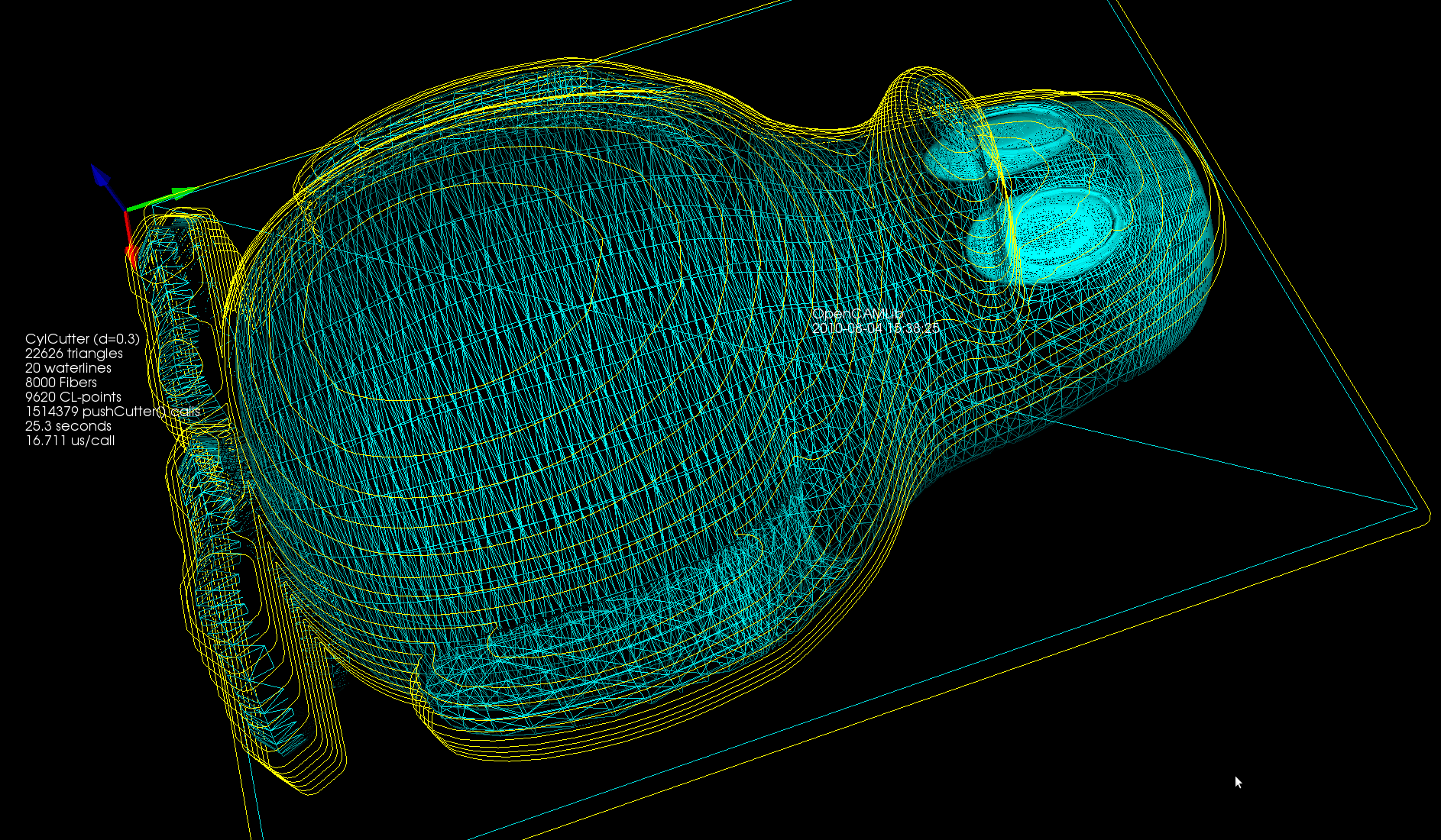
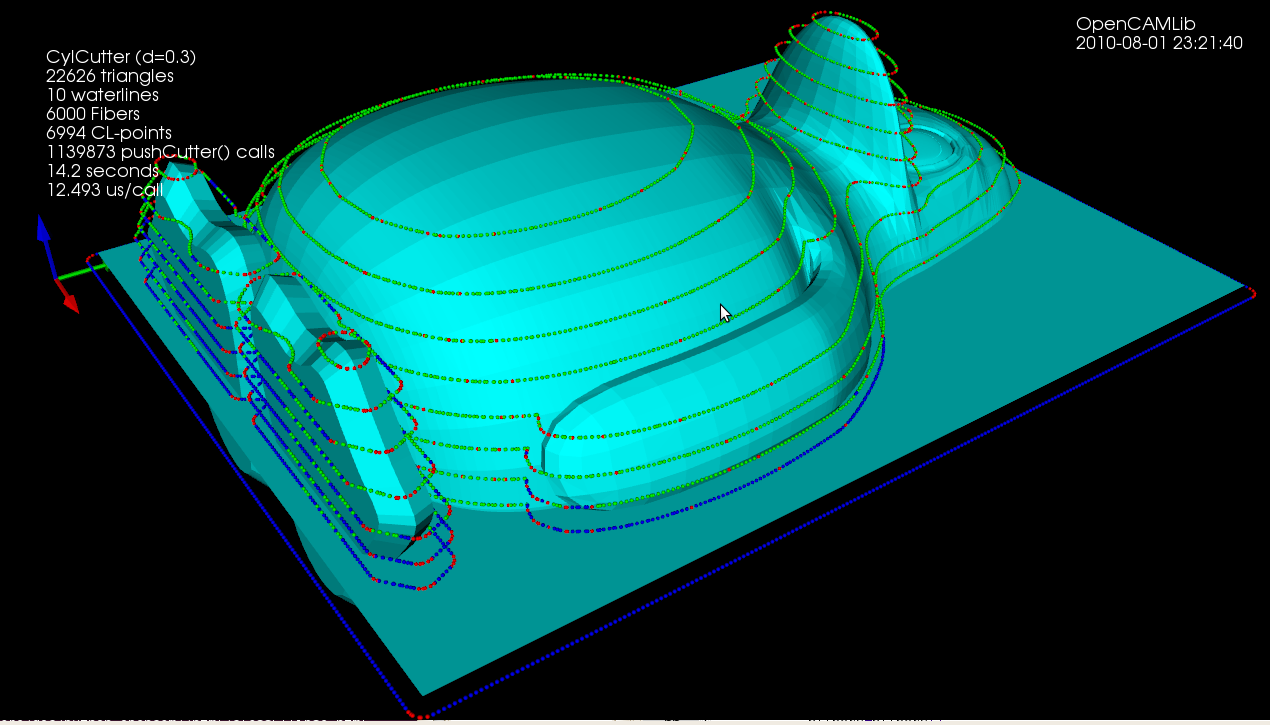
This example has three times more fibers, and thus also CL-points, than the original one, but it still runs in a reasonable time of ~15s because (1) I hard-coded the matrix-determinant expressions everywhere instead of relying on a slow general purpose function and (2) the batch-processing of the fibers now uses OpenMP in order to put all those multi-cores to work.
(red=vertex contacts, green=facet contacts, blue=edge contacts)
My initial point-ordering scheme based on a complete breadth-first-search at each CL-point is a bit naive and slow (that's not included in the 15s time), so that still needs more work.
2010 Finnish MicroMagic Open
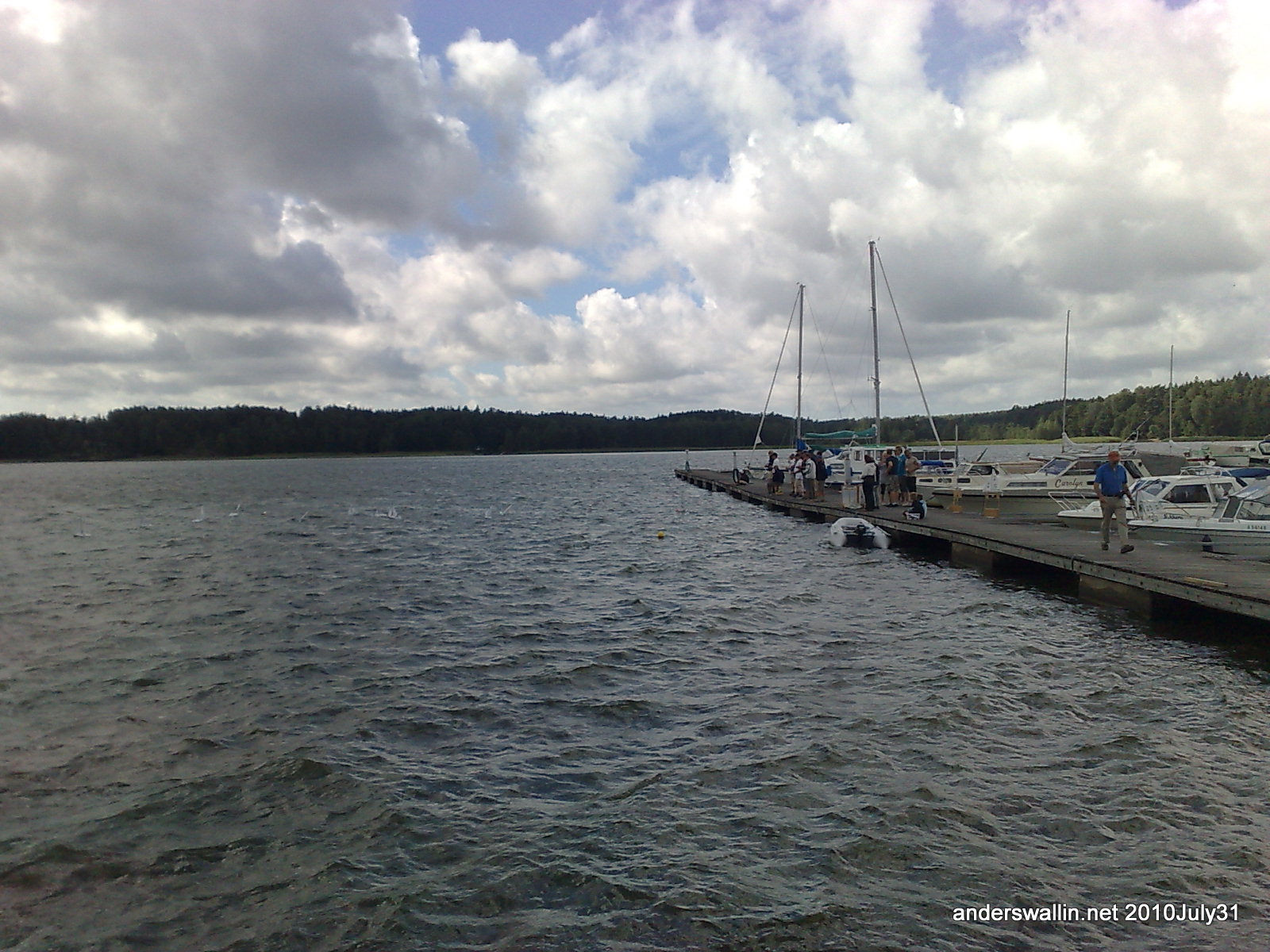
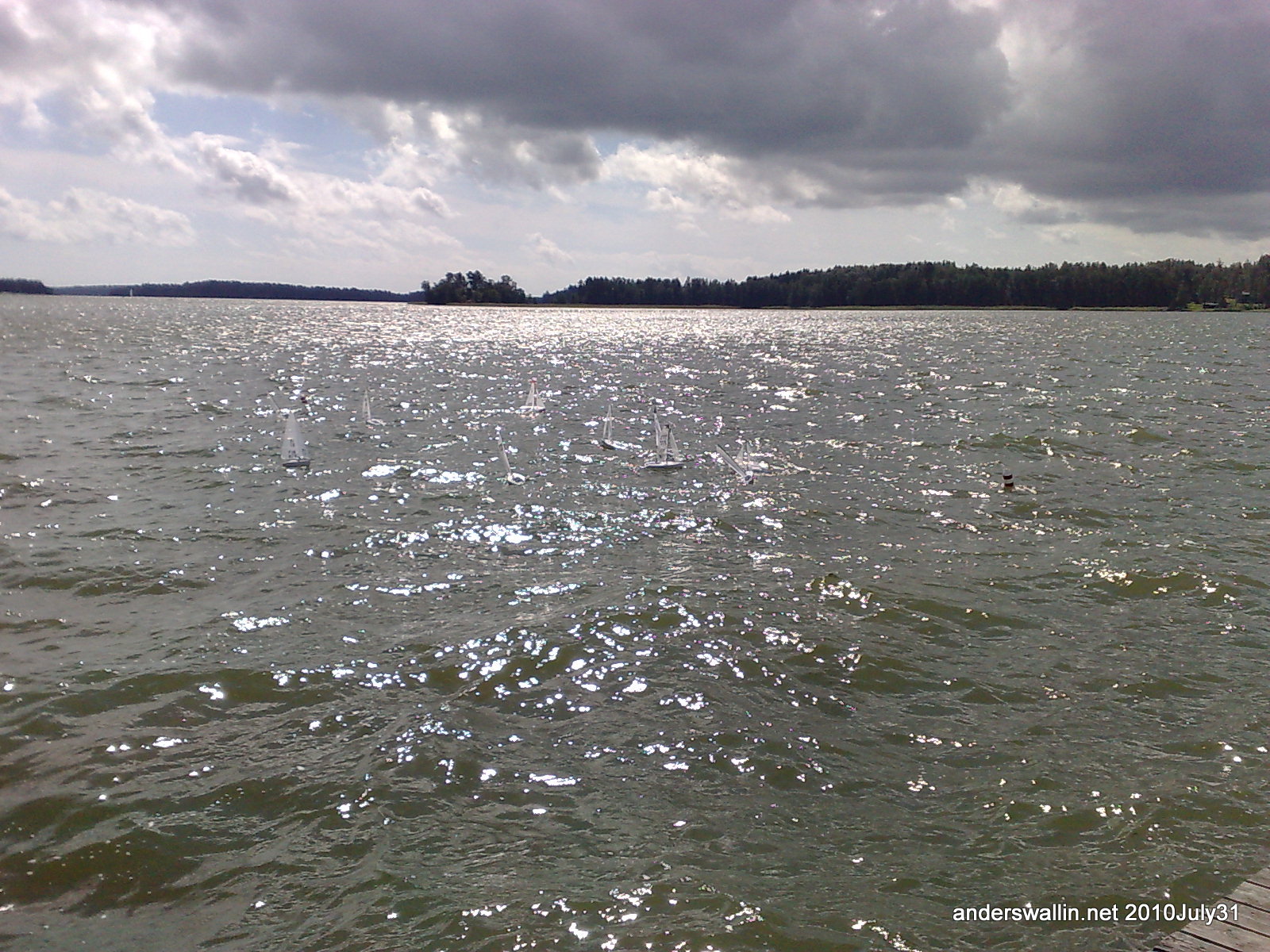
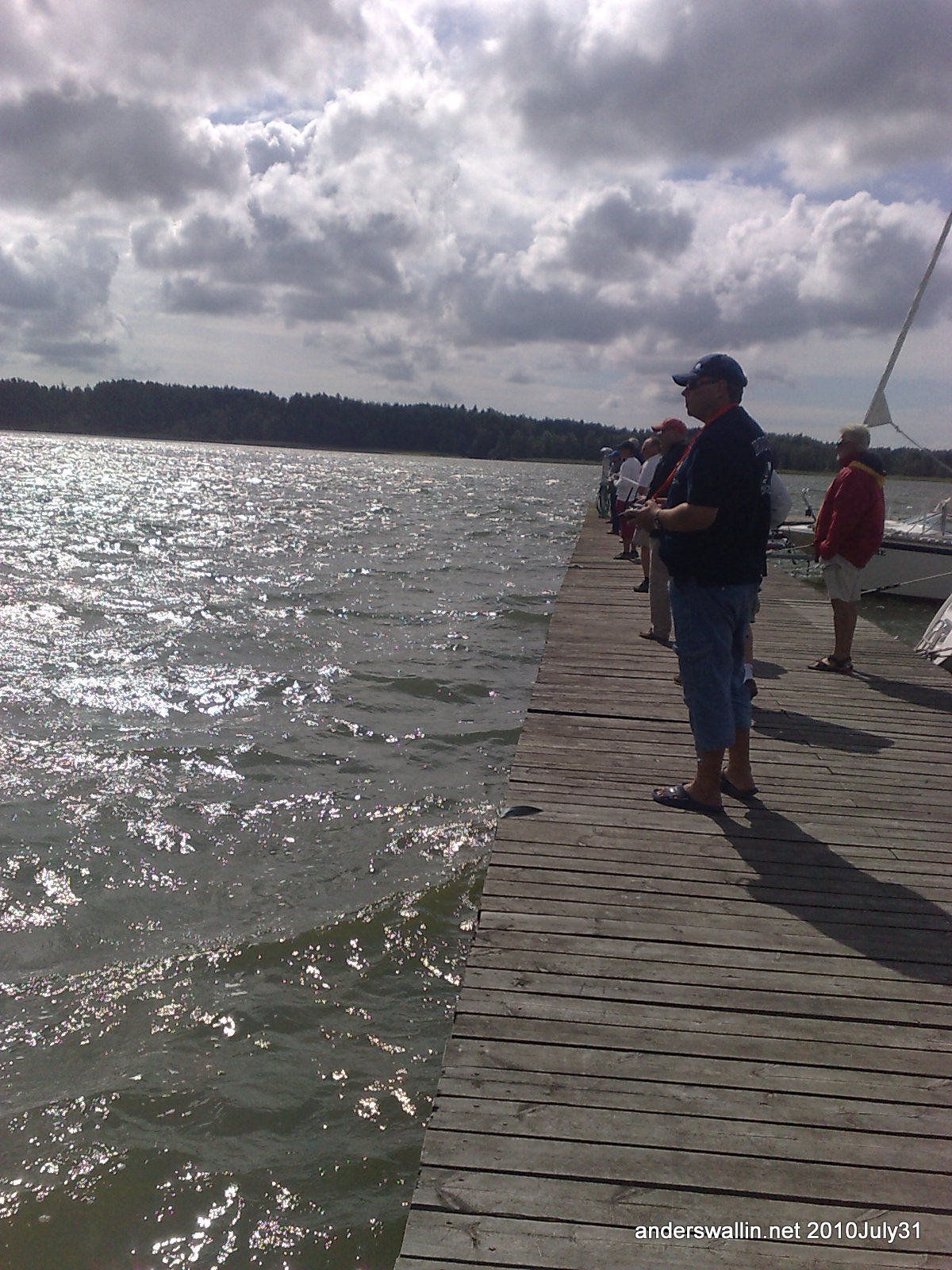
22 skippers with guests from RUS, SWE, and NED, in addition to FIN skippers came to this two-day event in Espoo. For me it was a non-event since I don't own the smaller MicroMagic rigs that were required during the first day with steady 7-8m/s and up to 11-12m/s of wind in the gusts.
At times you hear voices out there who mutter that the IOM sort of "fails" as a one-design because there isn't a minimum fin thickness, and the minimum weight is so low it is really difficult to DIY build a competitive boat on your own kitchen table. In contrast, the MicroMagic seems to do a reasonably good job of "pure one-design" with the hull and appendages, although people do play around with combinations of MkI and MkII fins and rudders.
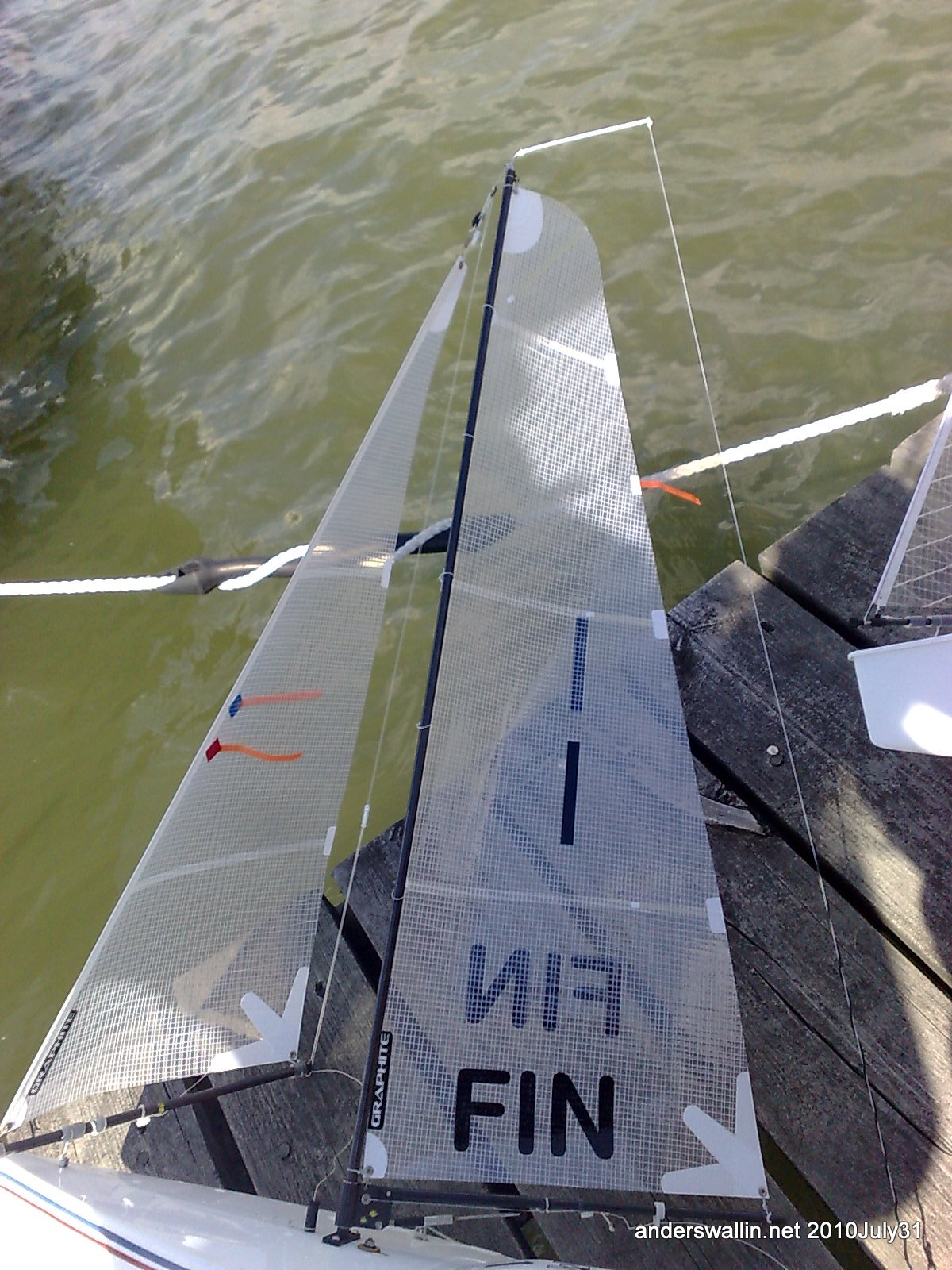
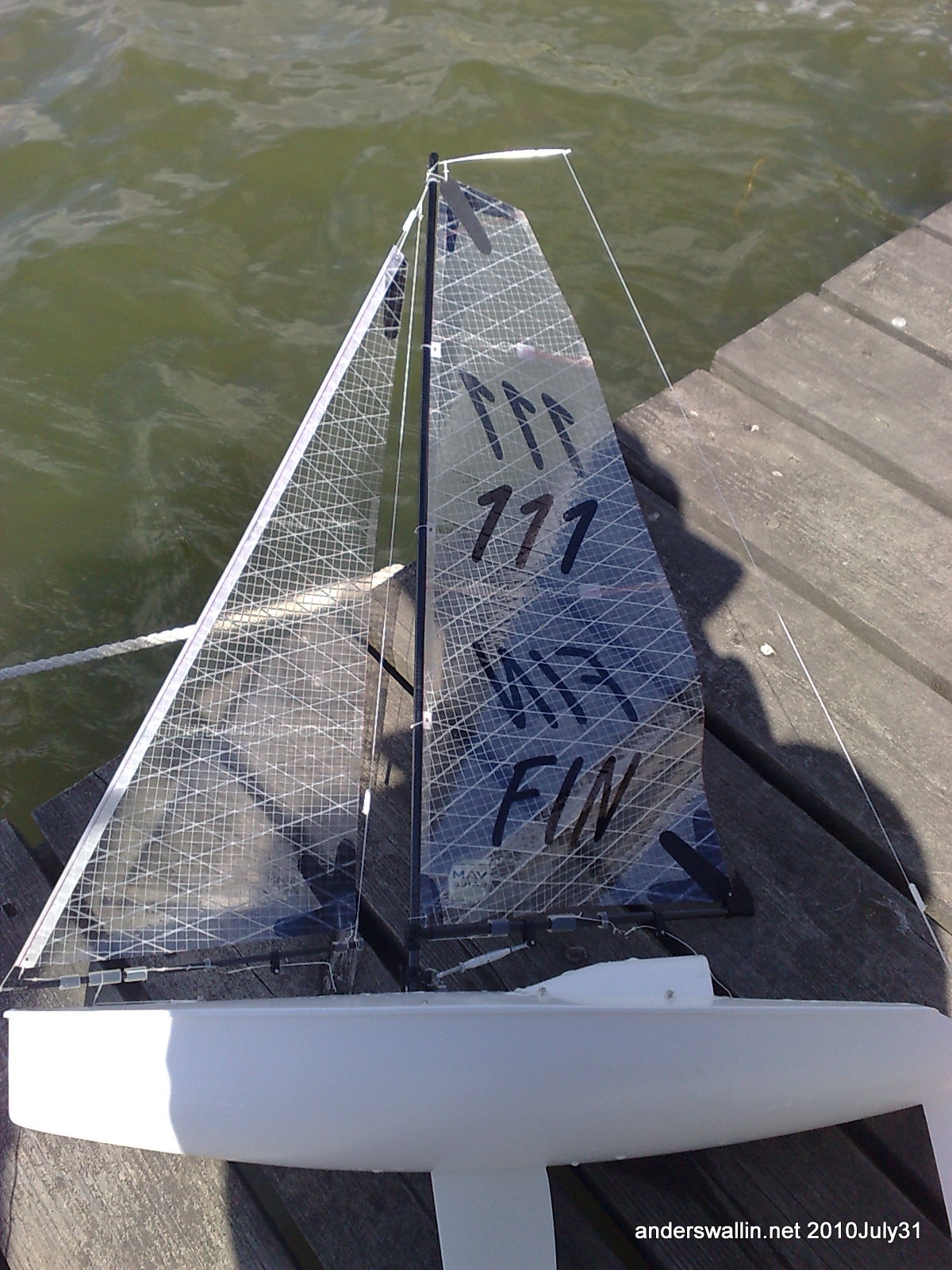
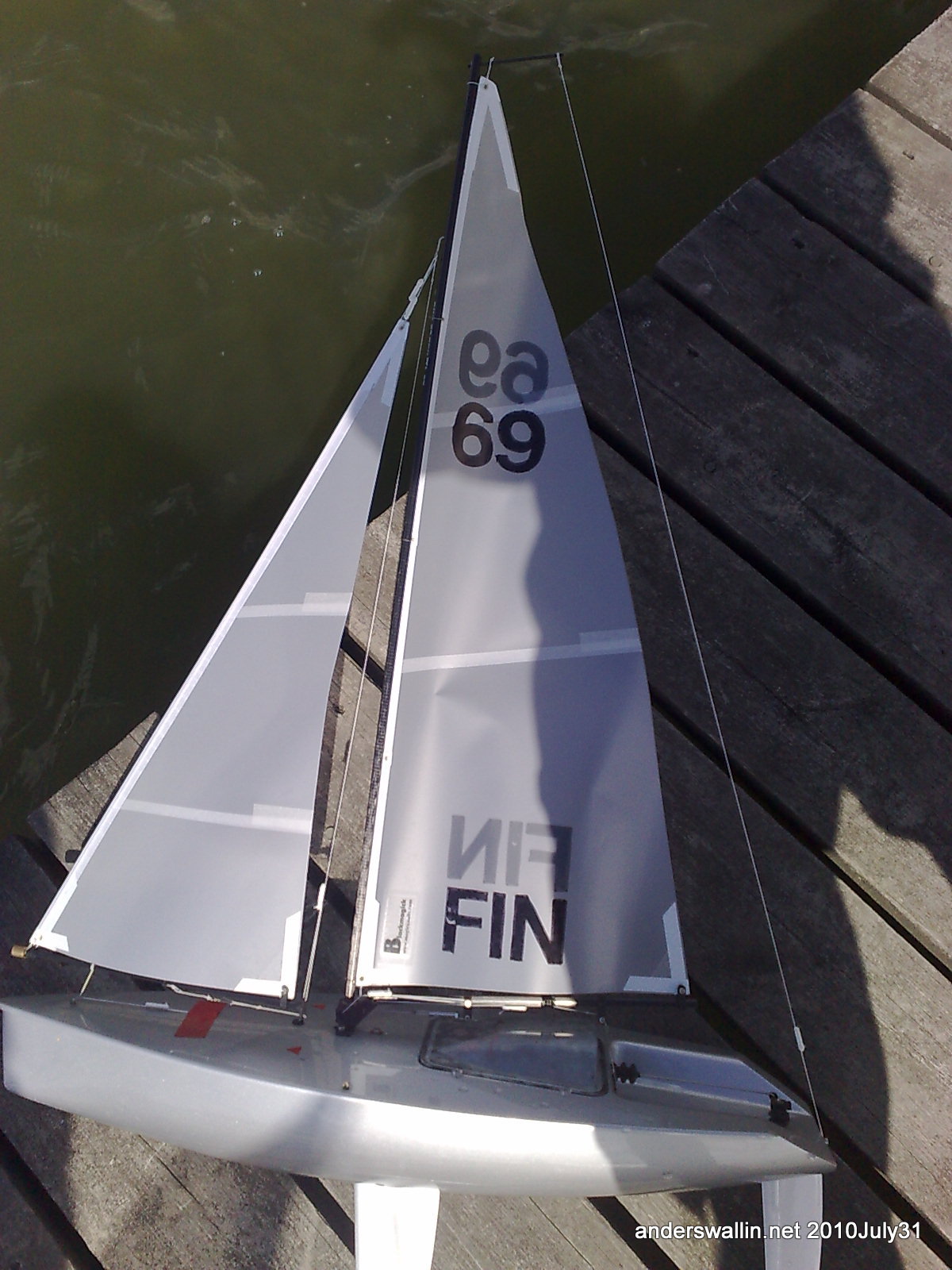
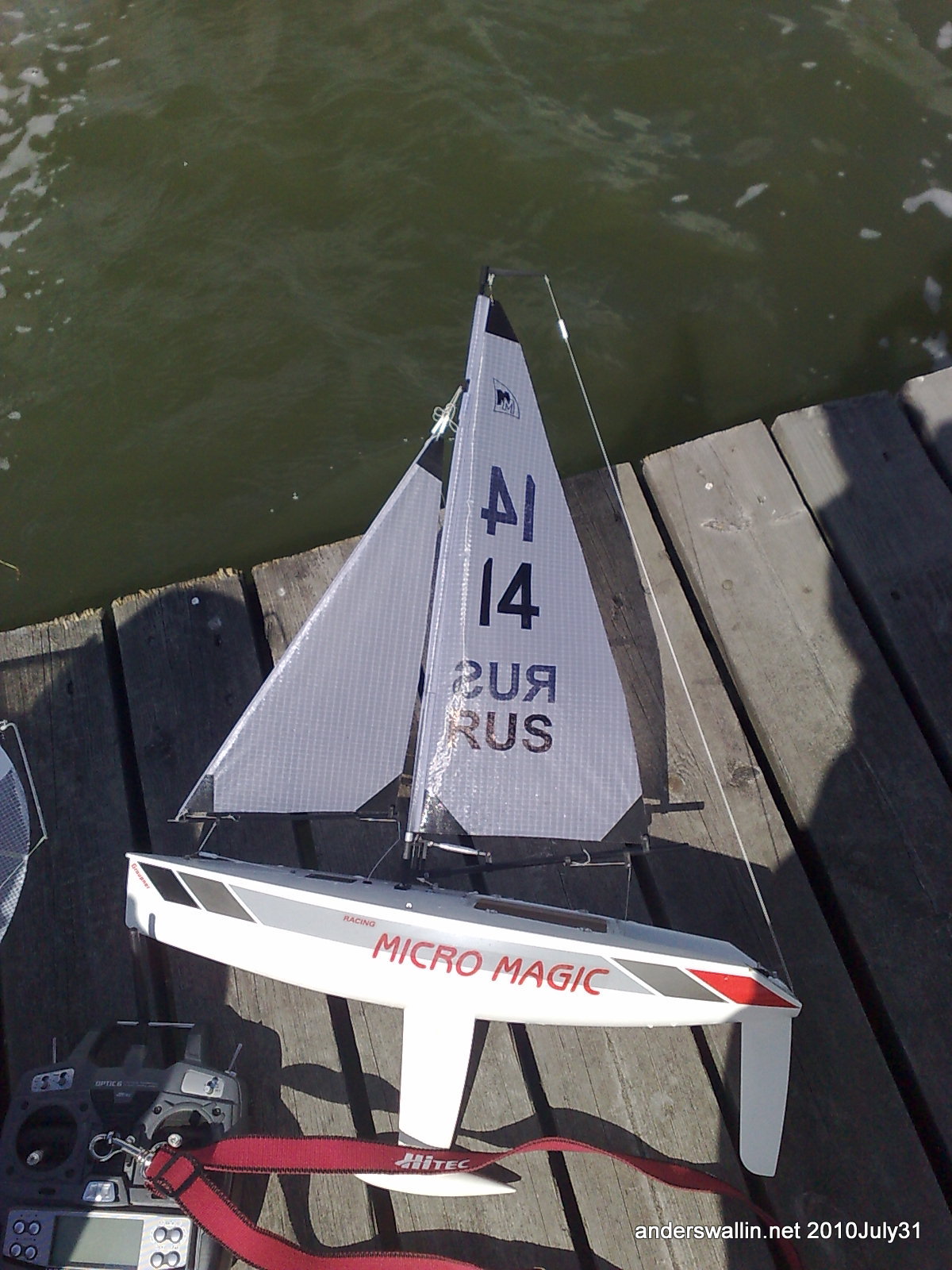
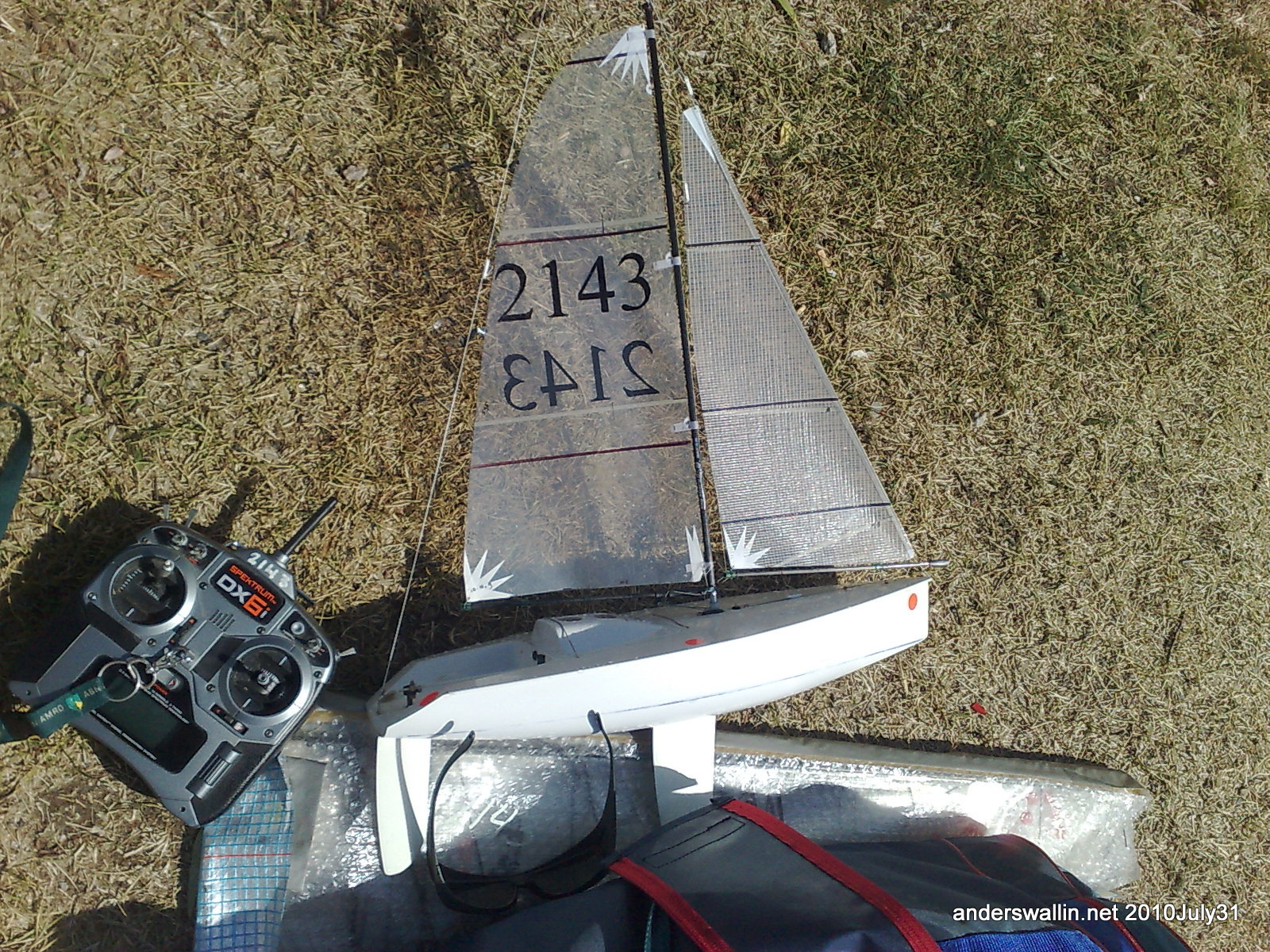
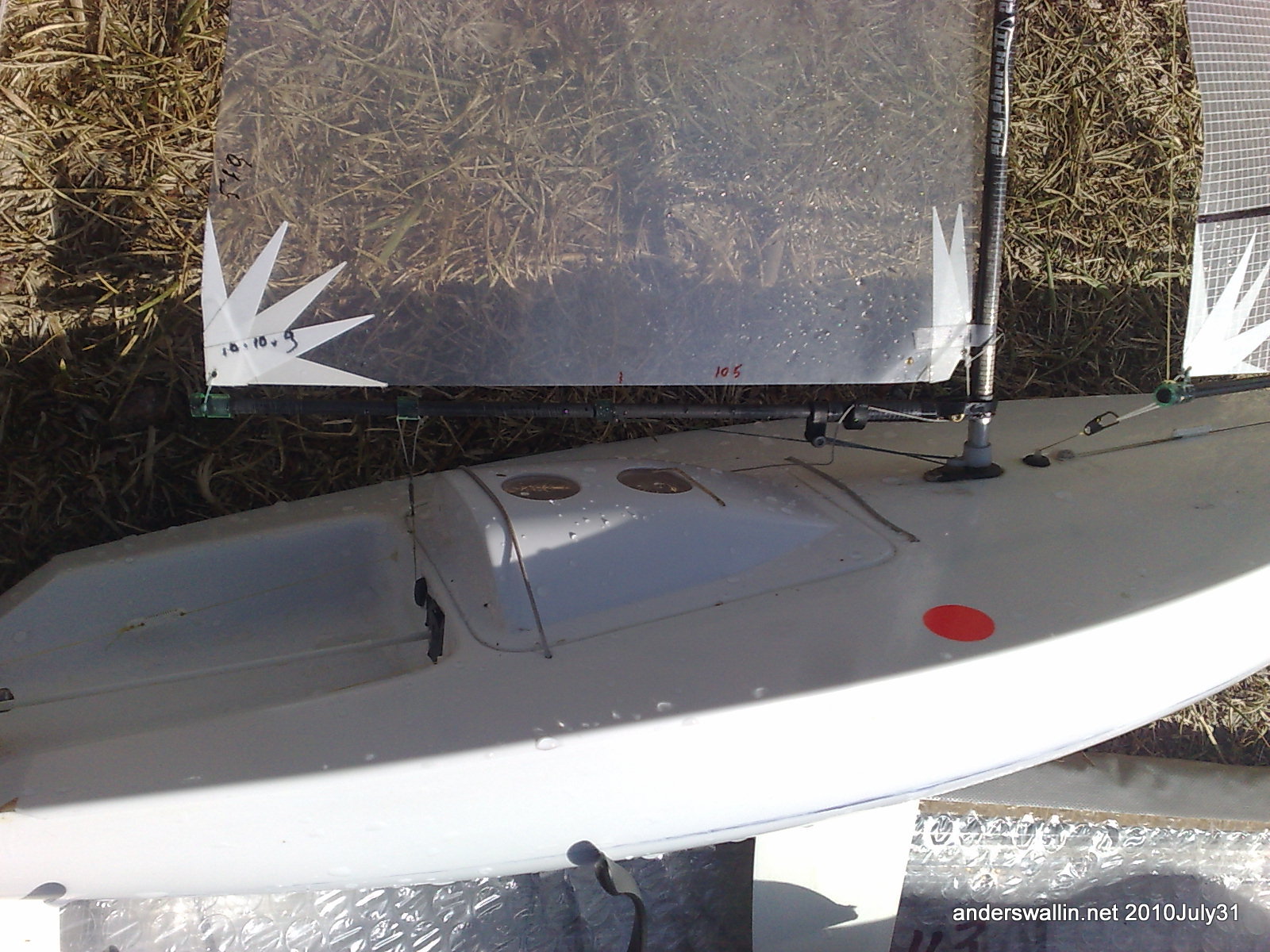
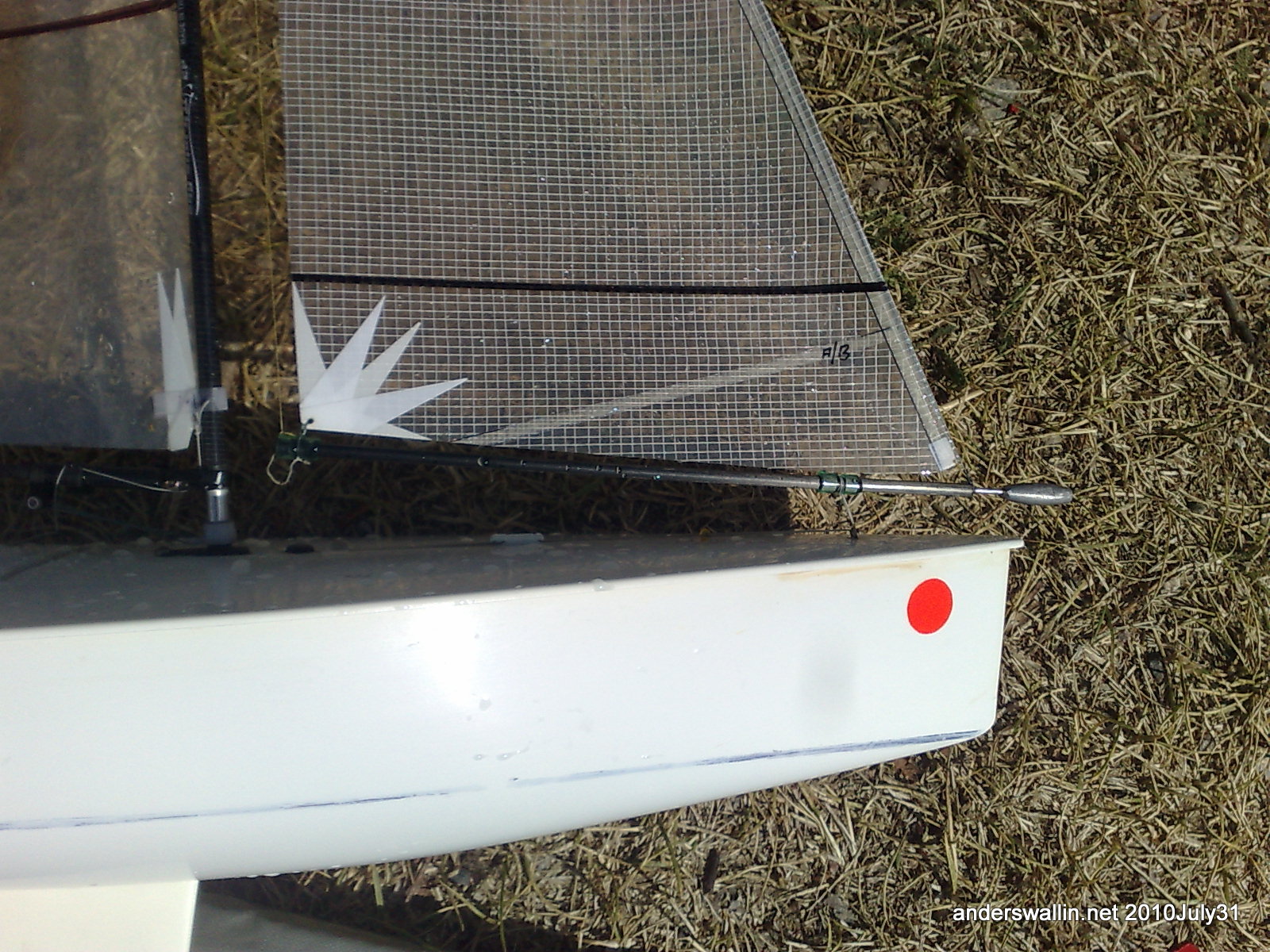
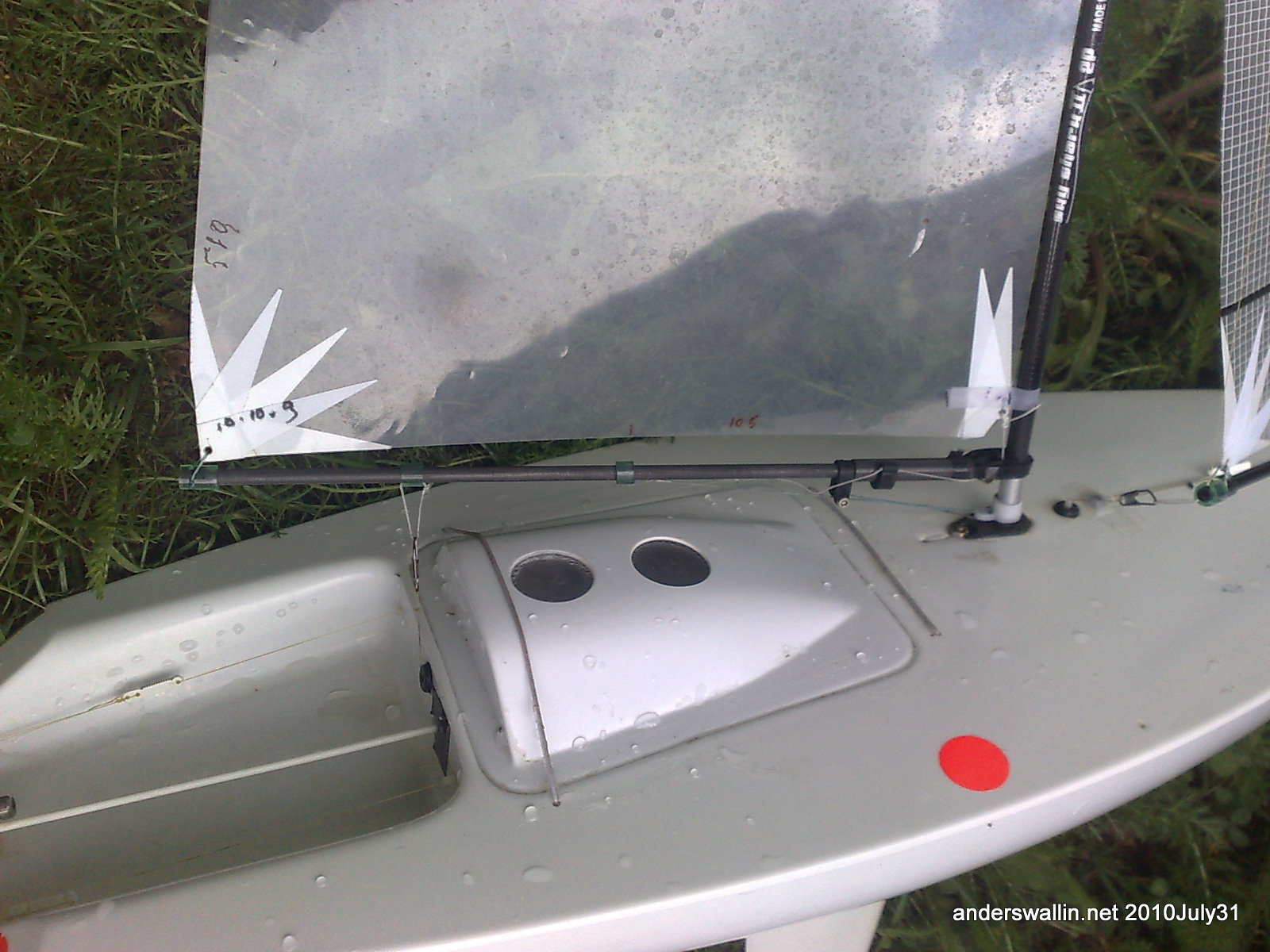
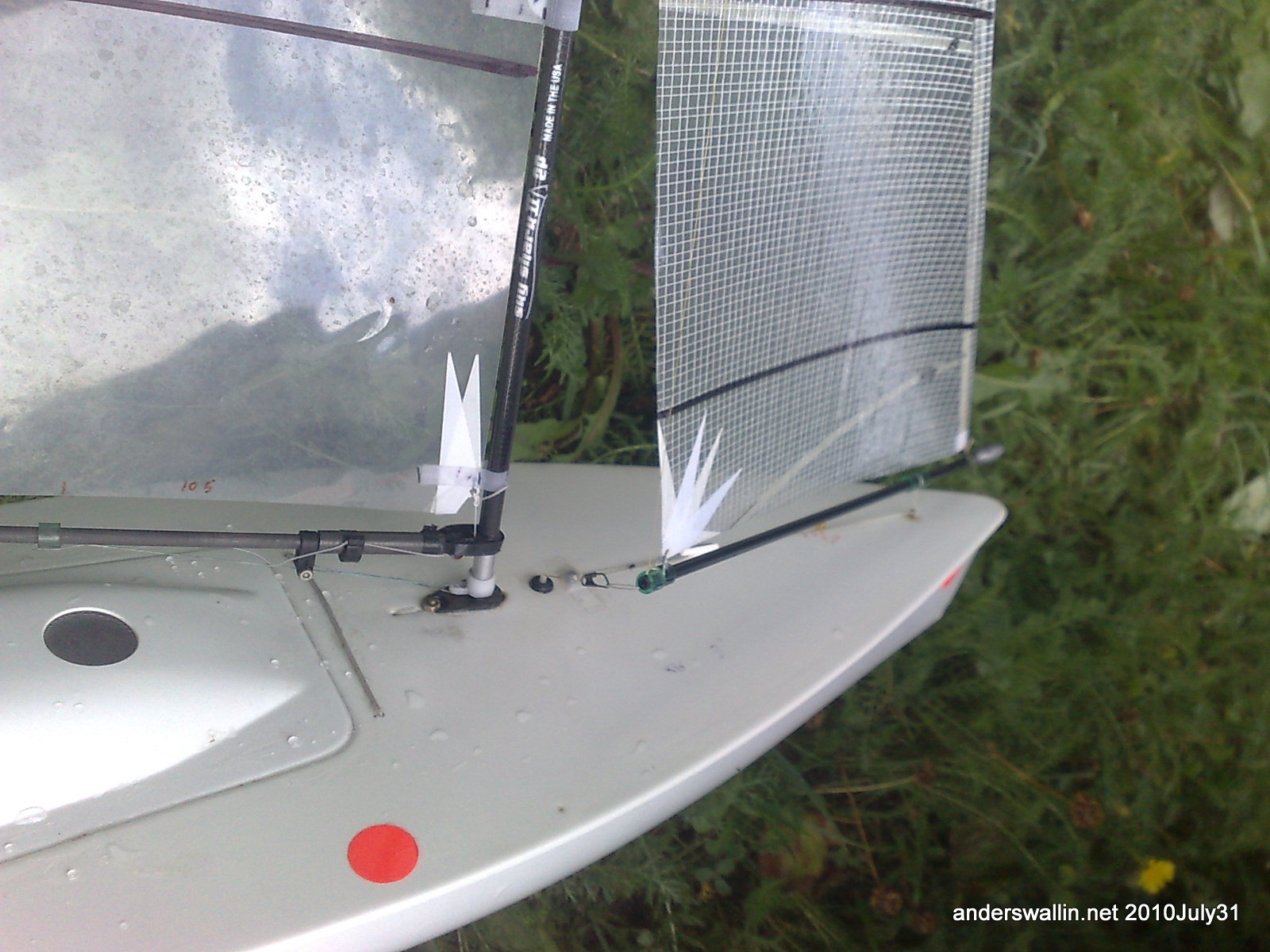
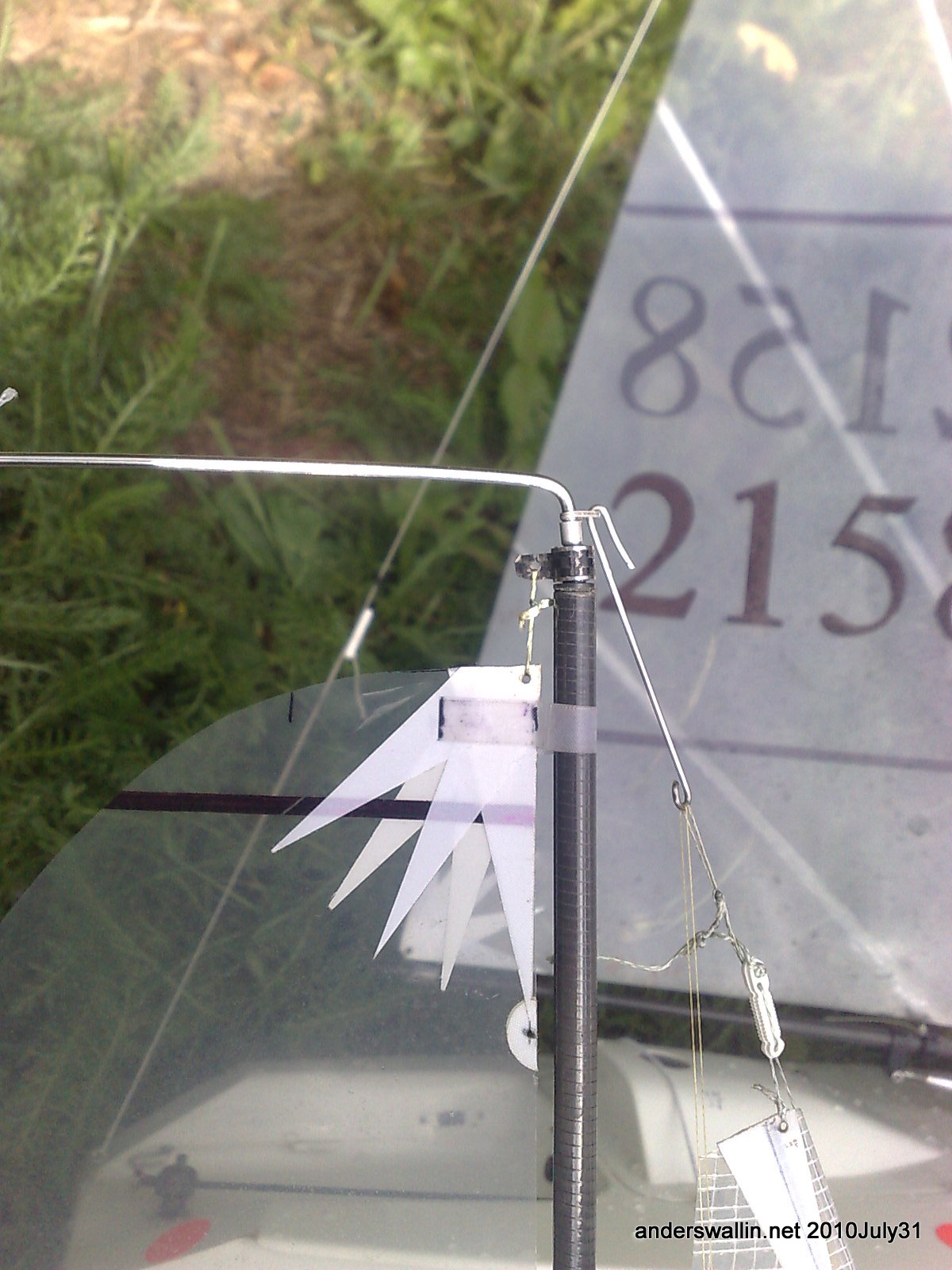
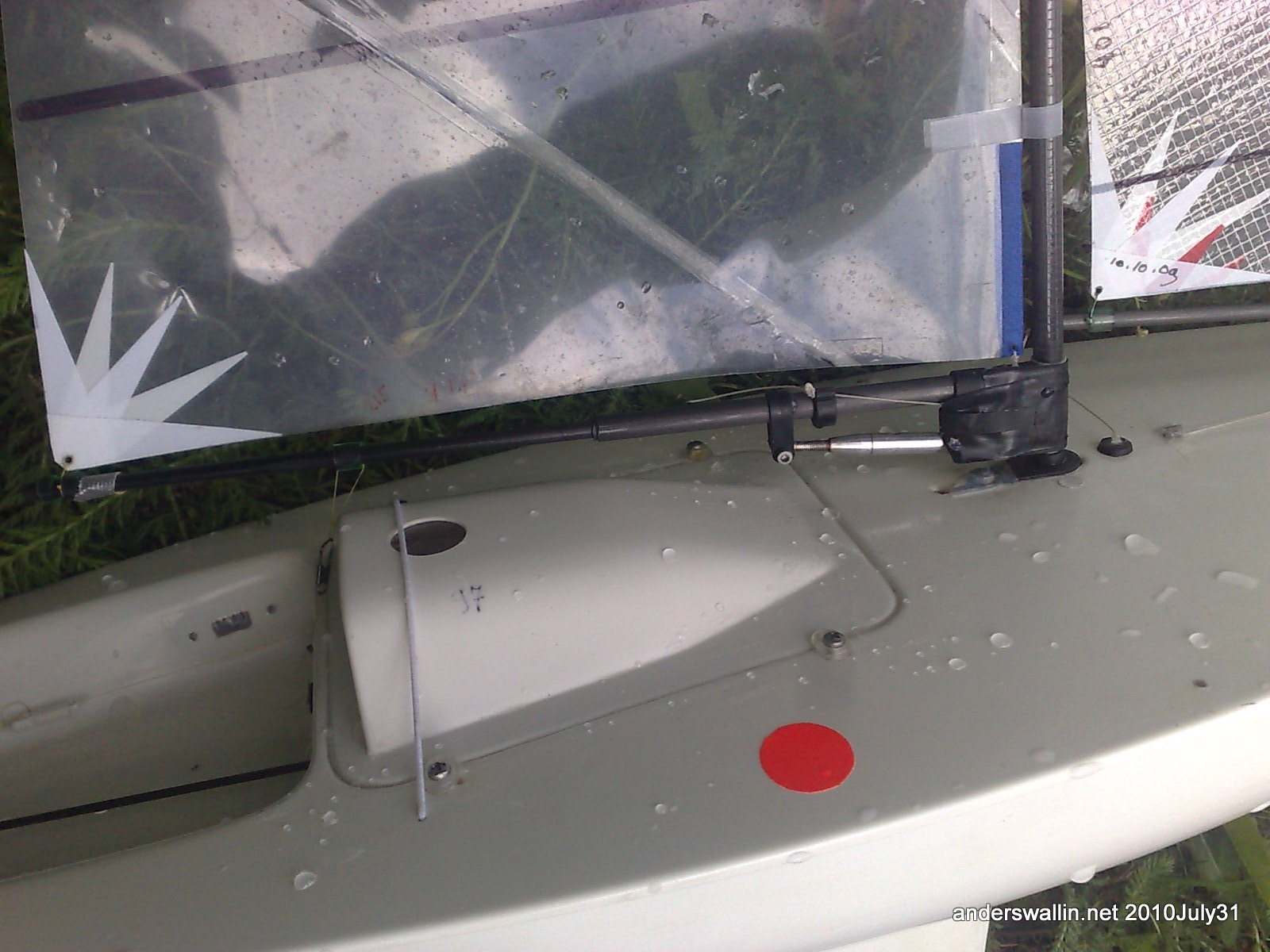
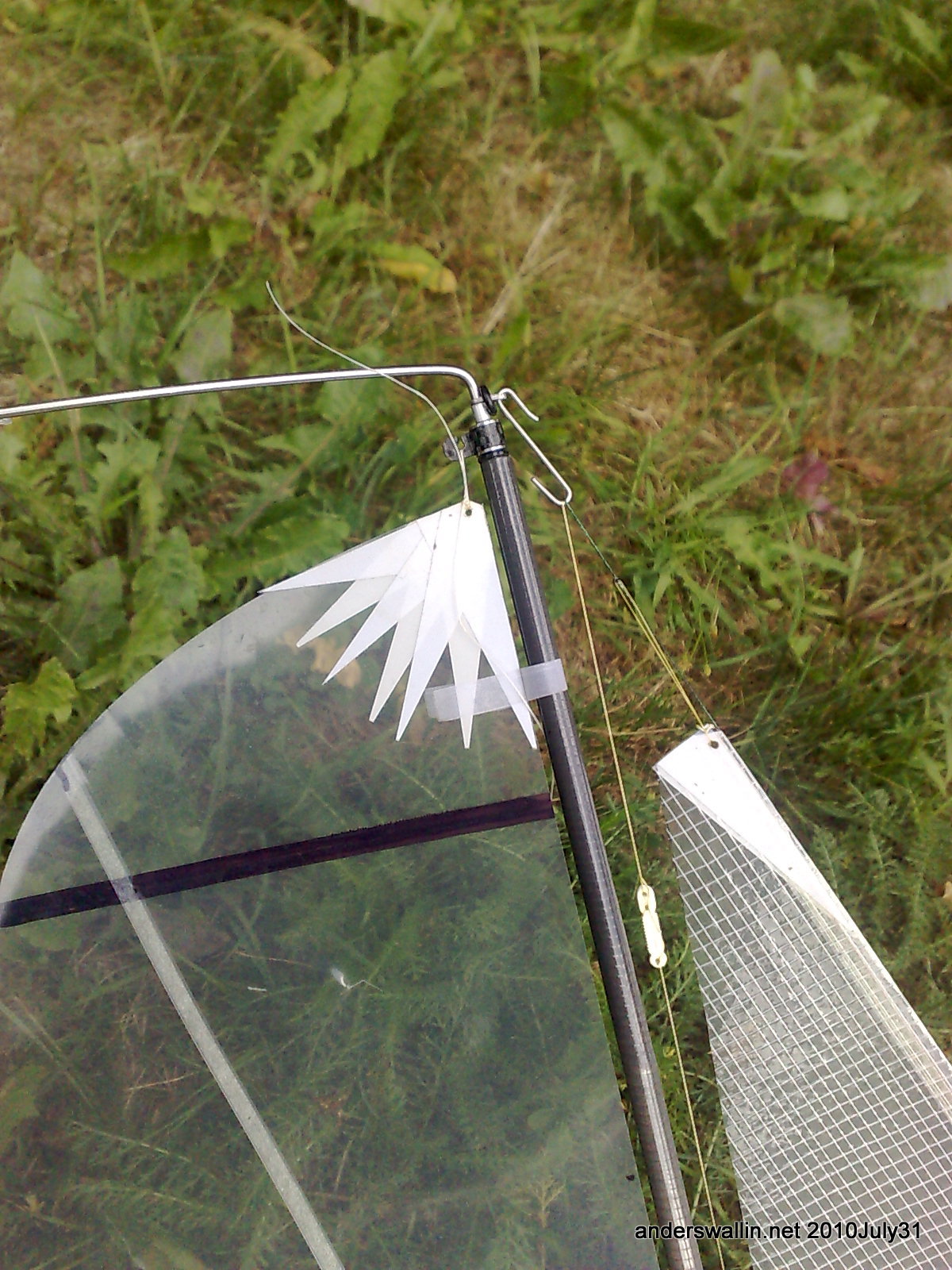
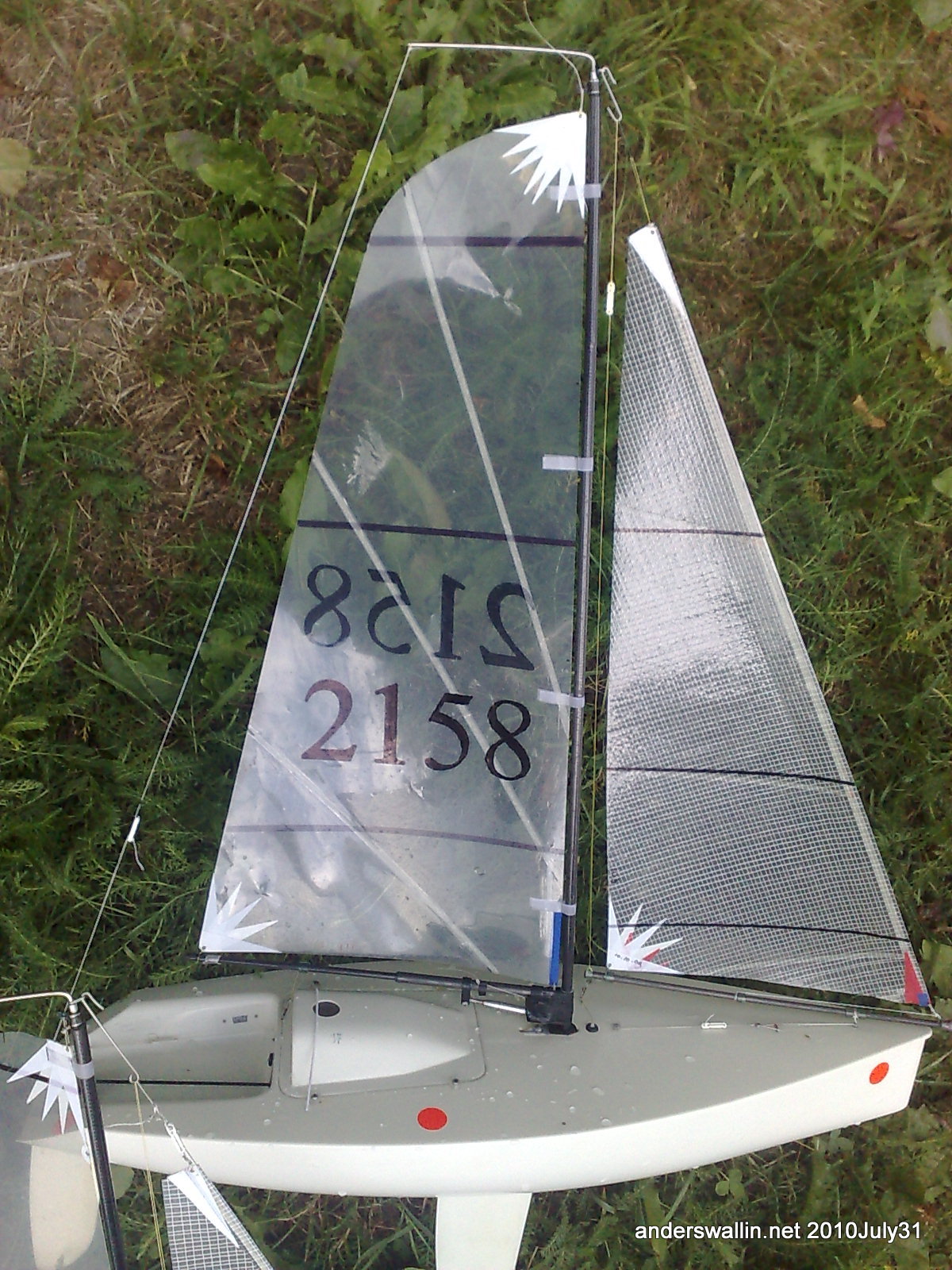
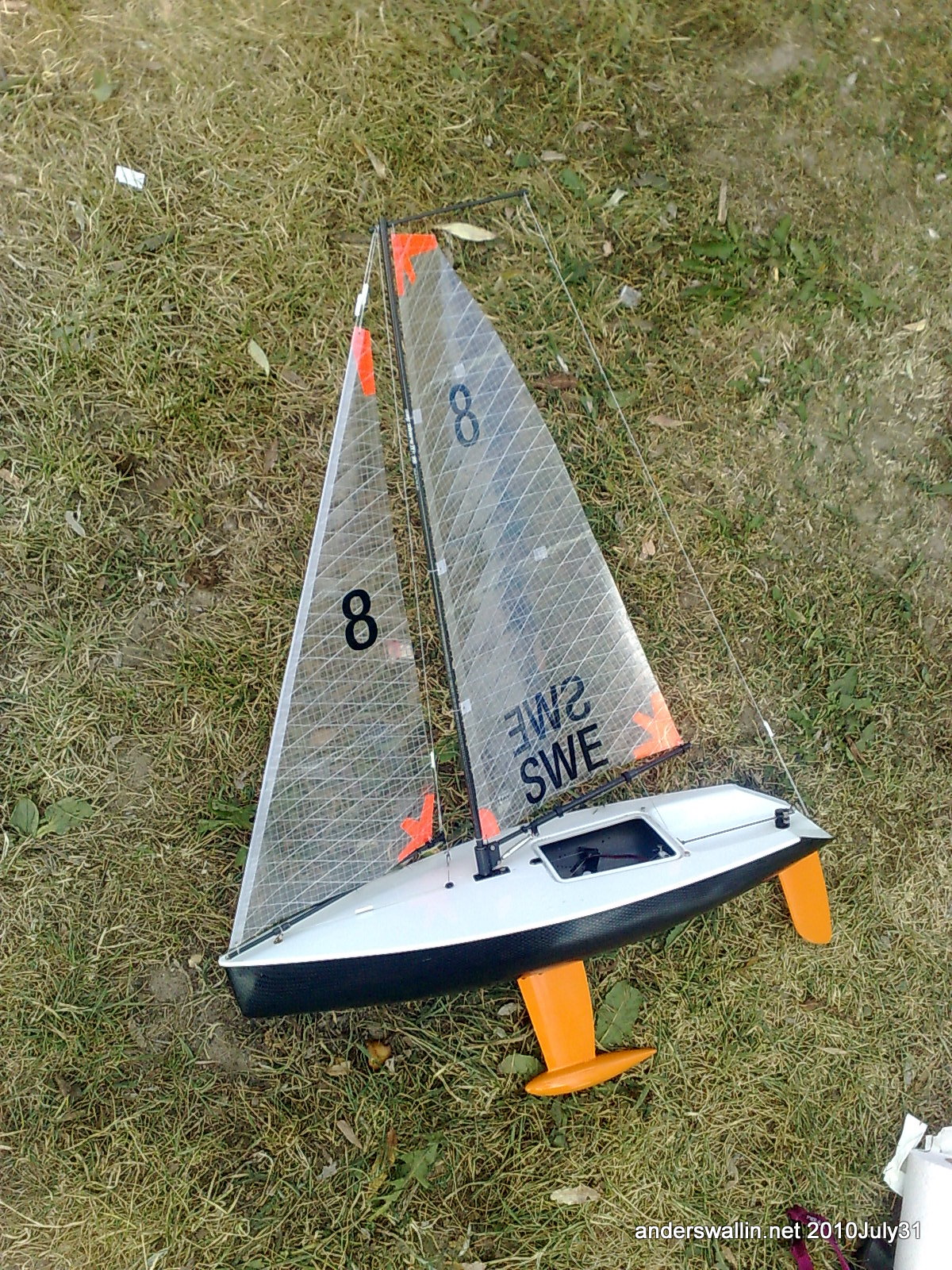
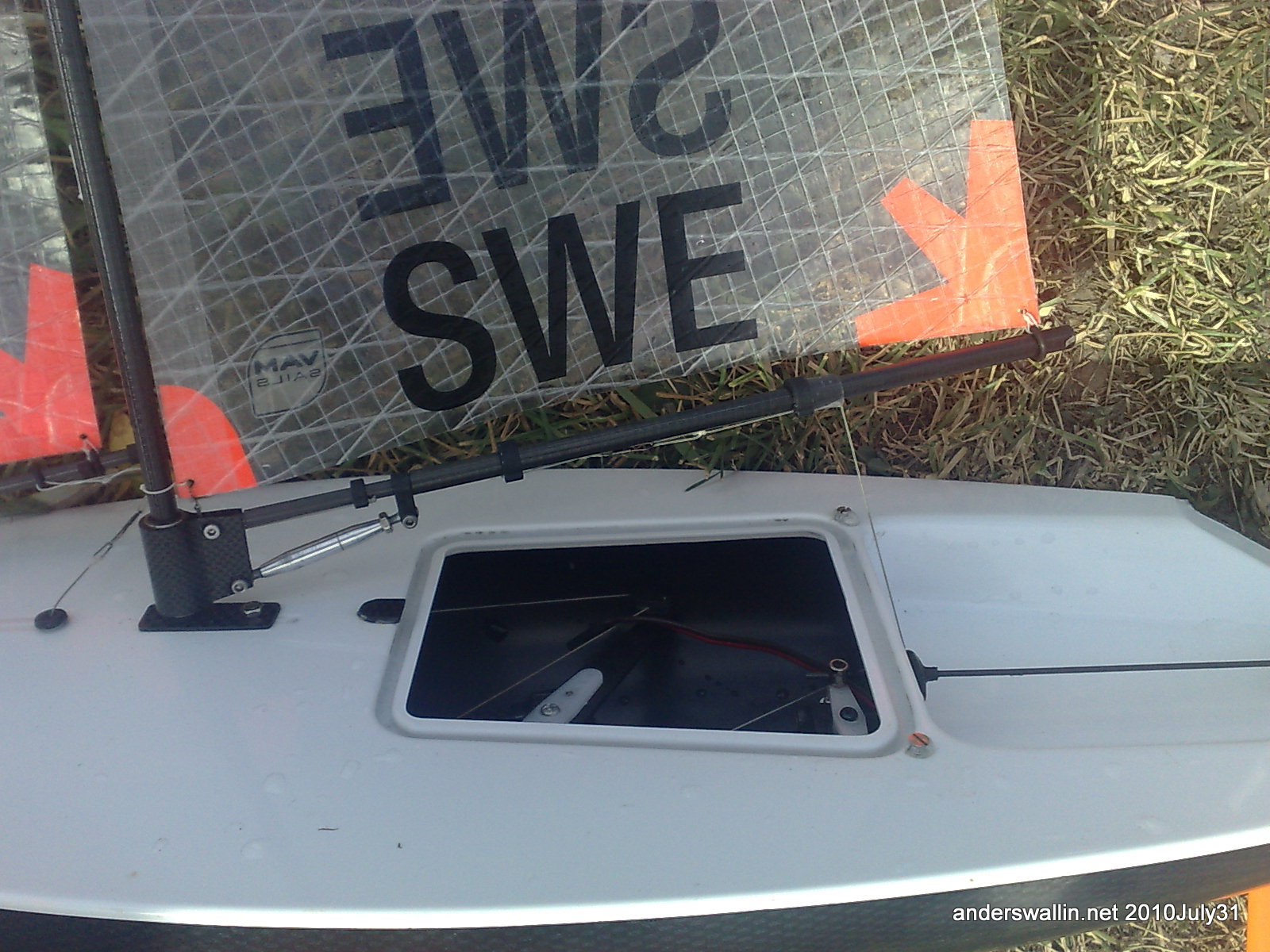
But compared to the IOM, the MicroMagic rigs are a completely wild jungle! Although the biggest no1 (or should we call it "A"?) rig is limited to the stock size sails which come with the kit, there are little or no limitations on the smaller rigs. When there is this much freedom, people are bound to explore the design envelope, and unlike a pure one-design where everyone has the same equipment it will take some experience, time, and money to converge on rig designs for the smaller sails which are competitive. People seemed to use either no2 or no3 rigs yesterday, and I photographed some of them below. The top NED and SWE boats led the field along with FIN-111 who had obviously invested in the right kind of carbon-sticks, ball-bearing thingys, and sails. It looks like it is advantageous to get both the main and jib booms as close to the deck as possible.
All of this leads to a slight illusion then when you gladly advise the newcomer that the class is cheap and uncomplicated, "you get the kit for 170eur and you are done", when in fact the competitive people swap out fins and rudders right away, and spend 4-500 euros on a set of the latest carbon-ballbearing-super-mainsail-roach-rigs. Anyone with more experience in the MicroMagic class care to comment?
Saturnia pavonia
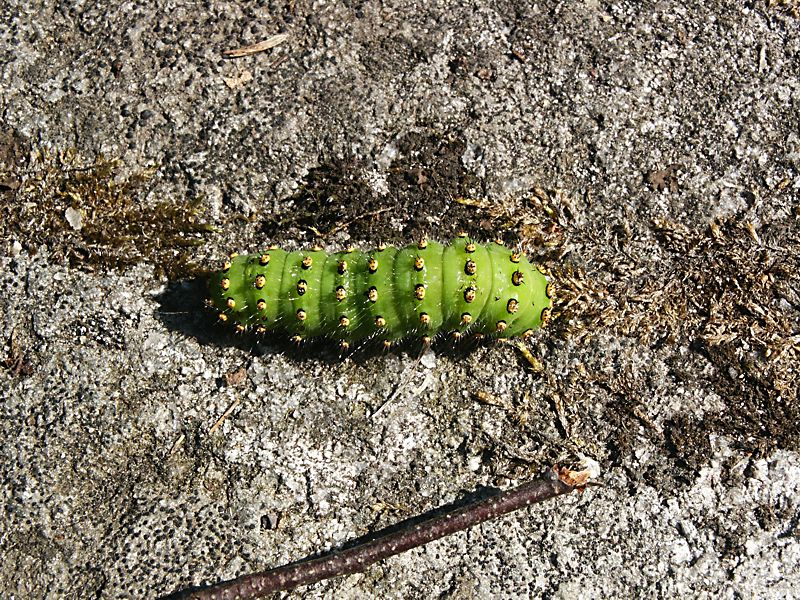
This swedish wikipedia page has images of the metamorphosis from egg to young caterpillar, mature caterpillar, and finally moth.
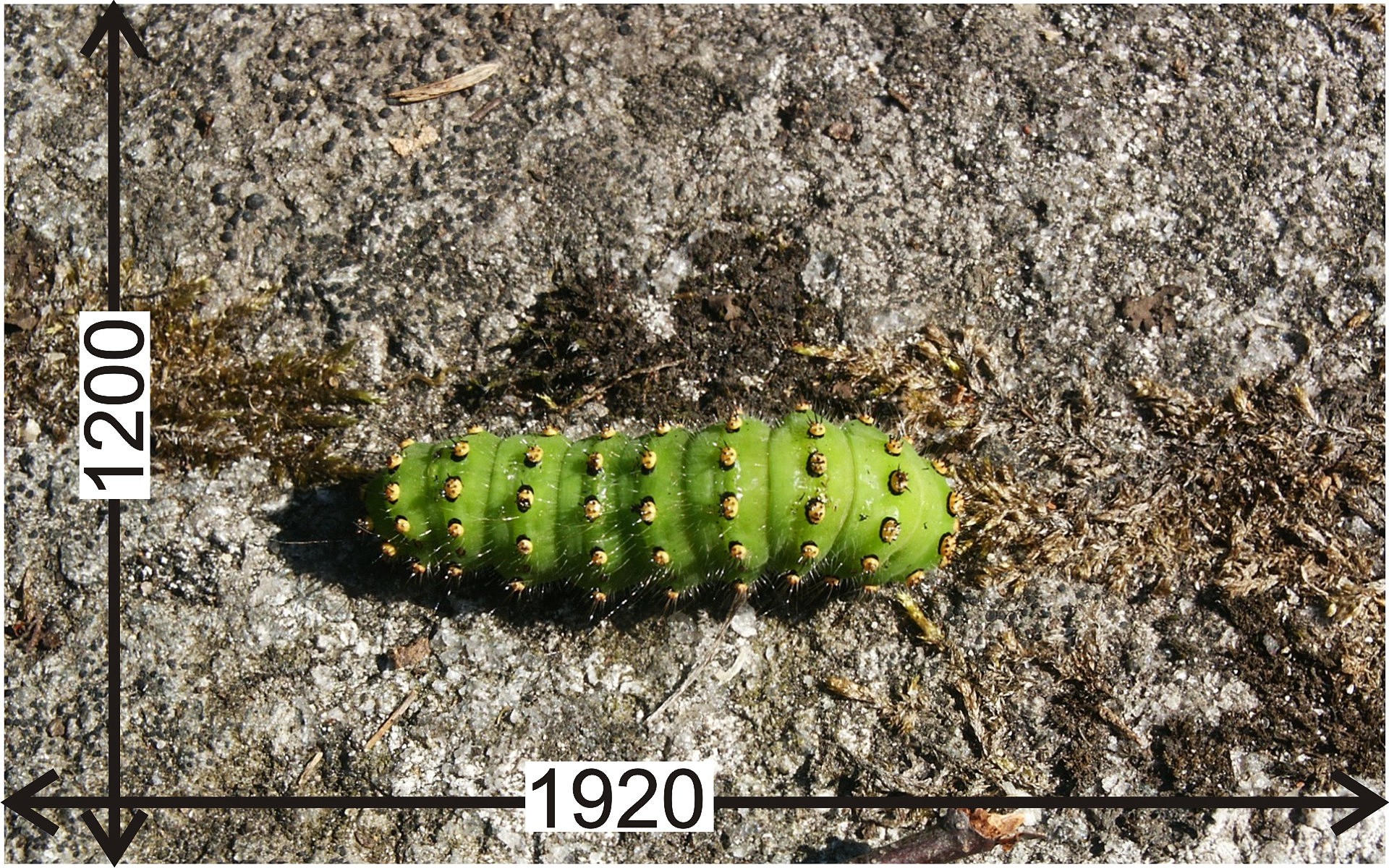
This is a bad mobile-phone photo (where are my two DSLRs when I need them!), but there's a nicer one from 2005 here (or try a big 1920 pixels wide image).